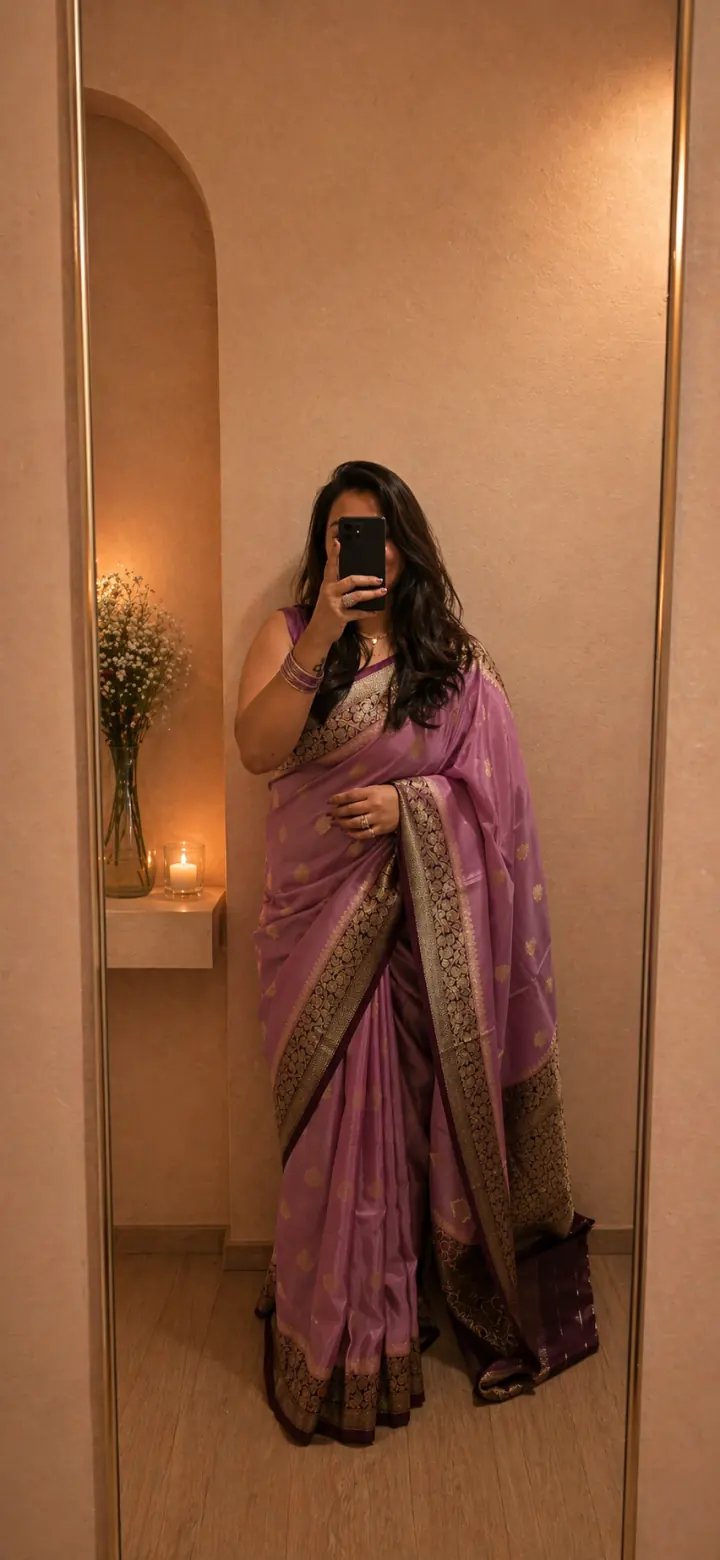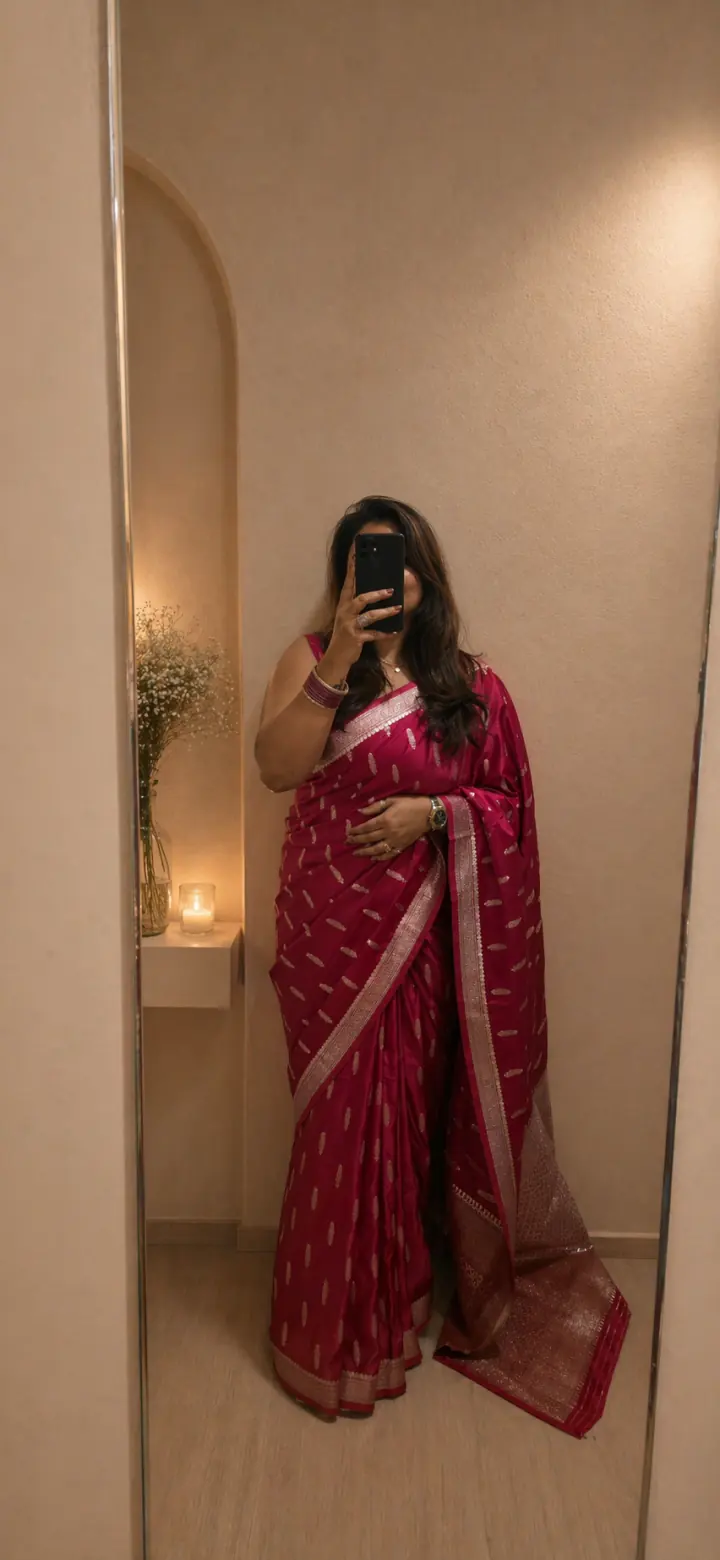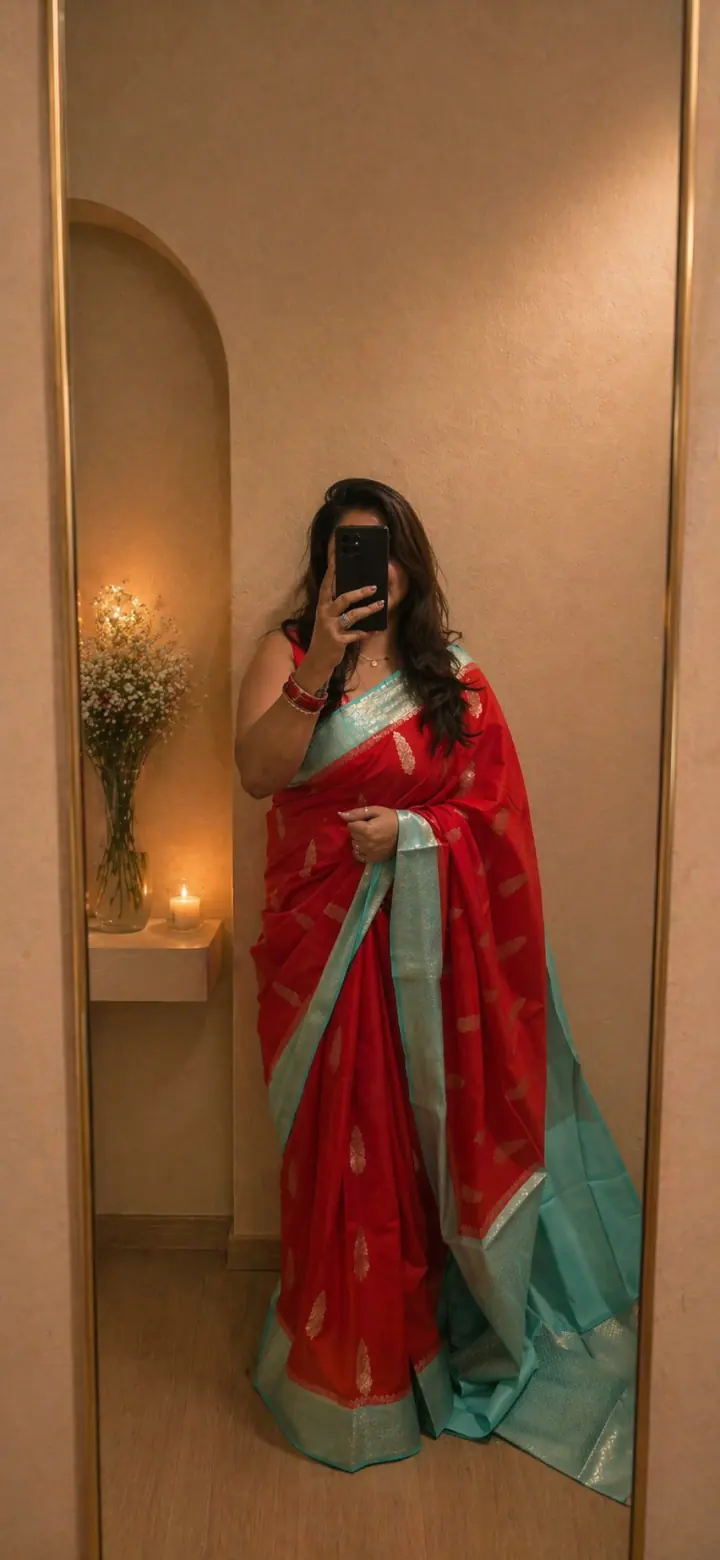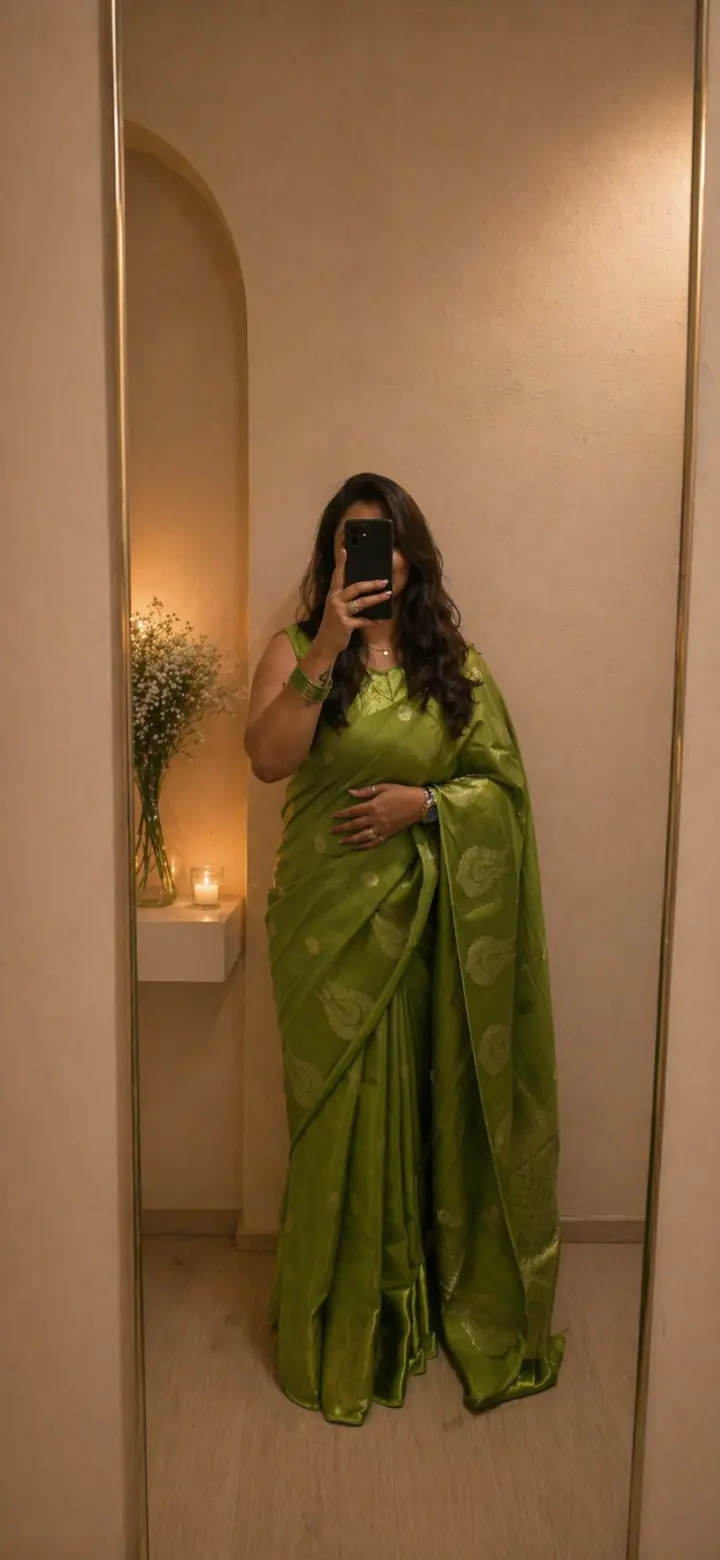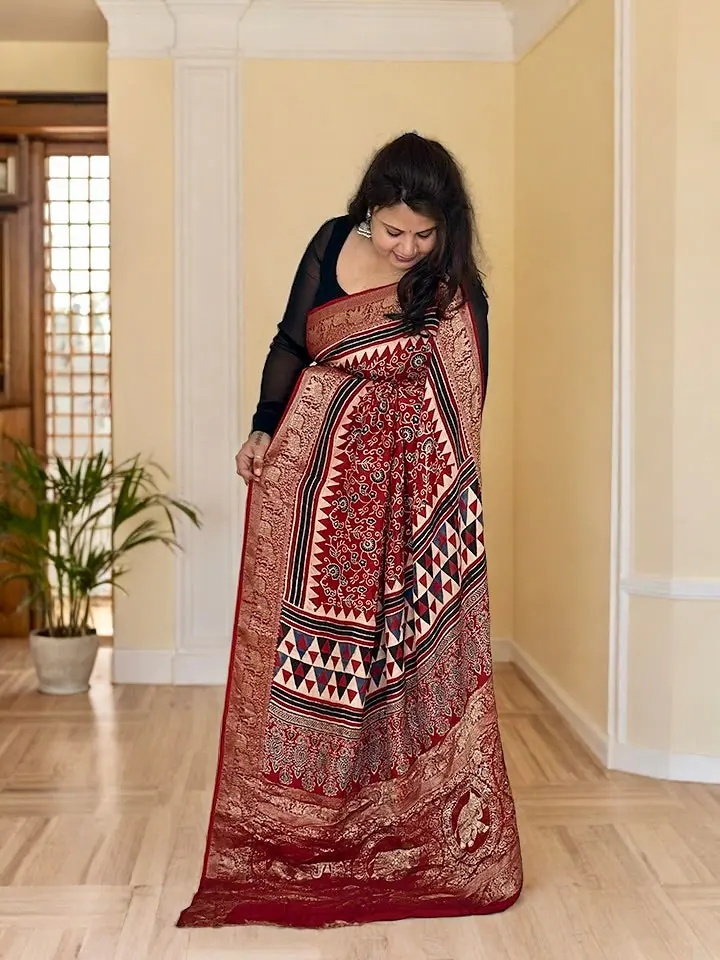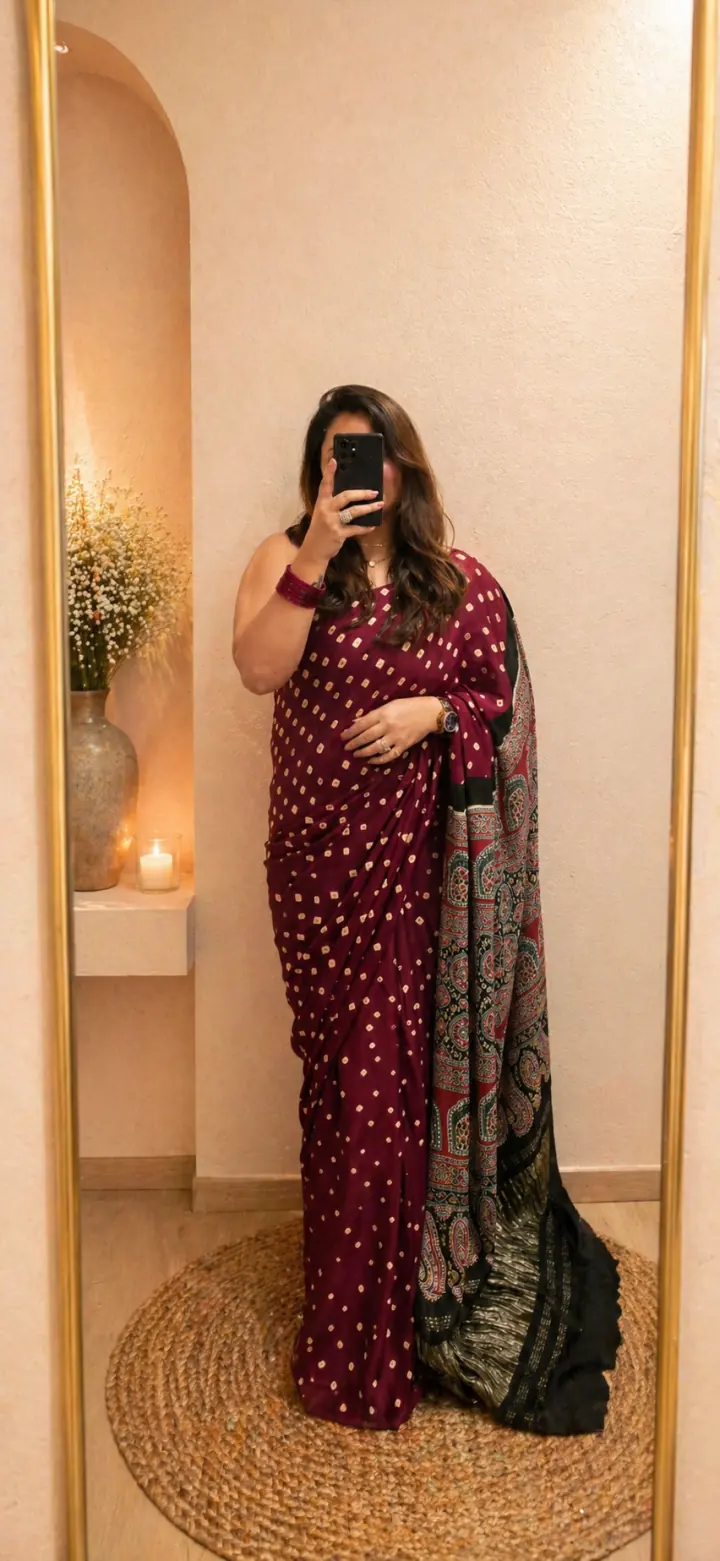
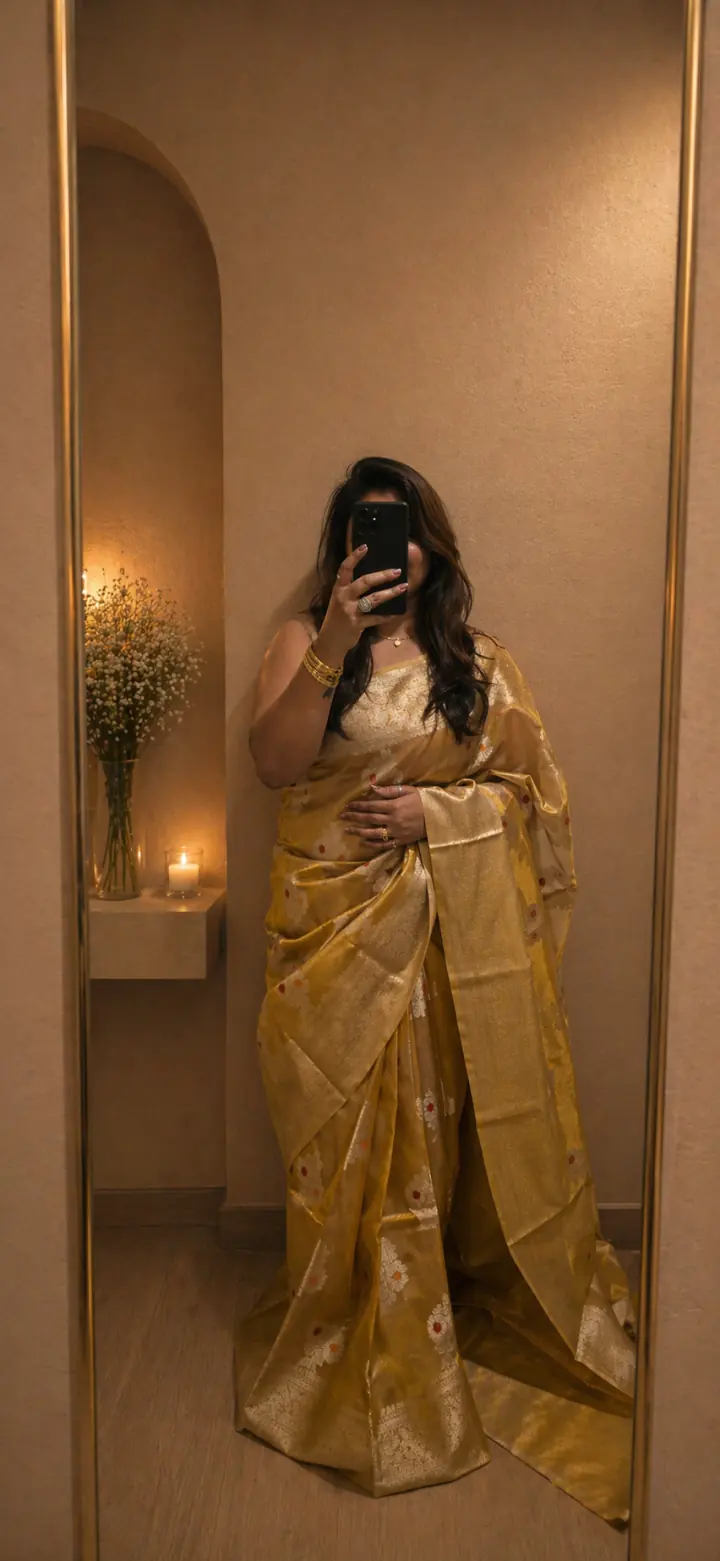
Banarasi sarees are grouped in two ways: by base cloth, such as katan silk, kora organza, georgette and shattir, and by weaving technique, such as tissue, tanchui, mashru, jangla, cutwork and butidar. Knowing both labels tells you what a saree is made of, how it will drape, and how much work sits in the weave.
What makes a saree "Banarasi"?
A Banarasi saree is a brocade woven in and around Varanasi, also called Banaras. Weavers raise patterns in the cloth using extra weft threads, often silk and zari (metallic thread), so the motifs are woven into the fabric rather than printed on it. Typical designs include interlaced floral and leaf forms, a row of upright leaves called a jhallar along the border, and net-like jaal backgrounds.
The tradition has deep roots, though accounts differ on the details. Varanasi was a cotton and textile centre by the late sixteenth century, and silk brocade weaving is generally said to have flourished from the seventeenth century onward, partly through weavers who moved from Gujarat. Gold and silver thread brocade became a Banaras specialty, and the Mughal courts are often credited with shaping its motifs. Treat specific dates cautiously, because the sources disagree.
The name has legal weight too. "Banaras Brocades and Sarees" is a registered Geographical Indication, which limits the term to goods made in six districts of Uttar Pradesh: Varanasi, Mirzapur, Chandauli, Bhadohi, Jaunpur and Azamgarh. If a seller calls a saree genuinely Banarasi, it is reasonable to ask where it was woven.
Types by base cloth
The base cloth determines weight, transparency and feel.
Katan
Katan is the classic Banarasi base, a plain-weave cloth of twisted silk yarn. It is lustrous, smooth and relatively heavy, and it is the usual choice for bridal and heirloom sarees. It is also the costliest because of the silk and the time needed.
Kora (organza)
Kora is a crisp, sheer cloth that holds its shape. Woven with zari and silk motifs, it feels airy and looks modern, which is why it is popular for summer weddings and day functions. It benefits from a lining or petticoat that shows through softly.
Georgette
Georgette gives a Banarasi weave a fluid, softly crinkled fall. It is lighter and easier to wear than katan, and it suits people who want the look of a brocade without the weight.
Shattir
Shattir is the base most often described as lighter and simpler, and some sources call it a cotton-silk mix. Because descriptions differ from one seller to another, ask for the fibre content.
Types by weave or design
These names describe how the pattern is built, and they can appear on any suitable base.
Tissue
Tissue Banarasi is woven with very fine silk and zari together, giving a lustrous, golden, almost paper-light sheen. It drapes softly and catches light, so it photographs beautifully. The tissue Banaras saree in gold shows how the metallic glow reads on a gentle base.
Tanchoi (tanchui)
Tanchoi is a fine satin-weave with small, dense patterns raised in extra weft, often tone on tone and traditionally without much metallic thread. The technique is usually traced to nineteenth-century Gujarat, where weavers from Surat are said to have learned it from a Chinese master. The Gujarati industry later faded, and weavers in Varanasi took it up in the twentieth century and often added zari and larger motifs of their own. Tellings of the story differ in the names and dates, so think of it as a widely repeated tradition, not a documented chronology. The Tanchui Banaras saree in pink is an example of the weave.
Mashru
Mashru is a satin weave with a silk surface and a cotton back, originally designed so that silk would not touch the skin. The name comes from an Arabic word meaning permitted, and the cloth is associated with Gujarat, especially Kutch and Patan, from at least the sixteenth century. After weaving, the cloth is soaked and beaten to bring up its sheen. Today some mashru uses rayon in place of silk because it is cheaper and easier to source. Banarasi mashru marries that firm, glossy structure with Banarasi motifs, as in the Mashru Banaras saree in Rani pink. Check the listing for the actual fibres.
Jangla
Jangla sarees are densely patterned with all-over vines, leaves and flowers, and older versions include animals, birds and hunting scenes. They are rich and complex, and they tend to be worn as bridal or heirloom pieces.
Cutwork (jali)
Cutwork gives a lace-like effect, where patterns are cut or left open so the ground shows through, creating a delicate openwork look. It is a pleasant option for warm weather because it is lighter than solid brocade.
Butidar
Butidar sarees repeat a small motif, a buti, over the whole body. The effect is polka-dotted or lightly floral, and the pallu and border usually carry heavier detail. This is an approachable style for first-time Banarasi buyers.
Vaskat
Vaskat uses large, bold motifs spread across the cloth, and it suits those who like drama.
What about viscose Banarasi?
Not every Banarasi-style saree is silk. Viscose, a regenerated cellulose fibre, is used as a lower-cost base that still carries a brocade pattern, and it is softer and lighter than katan. It can be a sensible entry point. The key is honest labelling, since viscose Banarasi should be described as such and priced accordingly. Look at the viscose Banaras saree in red and green to see how colour and pattern read on the fabric, and compare with the parrot green Banaras saree.
How to check a Banarasi saree before you buy
- Ask what the base is. Katan, kora, georgette, viscose or a blend: each behaves differently.
- Read the fibre and zari details. Ask whether the zari is metallic thread of real gold or silver content or a lower-cost metallic yarn. The answer affects price and care.
- Turn it over. In a brocade, the pattern is formed by extra threads that float behind the motif. On a well-finished piece those floats are trimmed neatly; a rough, matted back suggests careless work. A print would show no floats at all.
- Look at the motifs. Woven motifs have slightly stepped edges, because they are built from threads. Smooth, photographic outlines point to printing.
- Check the borders. The border should be integrated into the weave, not stitched on.
- Feel the weight. Katan and jangla feel substantial, while kora, georgette and tissue are light.
- Ask where it was woven. This ties back to the Geographical Indication, which covers only six districts.
- If a seller allows it, test a loose thread, not the saree. Real silk burns slowly with a smell like burnt hair and leaves a crushable ash. Viscose burns more like paper and leaves a soft grey ash, and synthetics melt into a hard bead. Take care and never test the saree itself.
Which type should you choose?
- For a wedding as the bride's family: katan or jangla, in a deep colour.
- For a wedding as a guest: tissue, kora or a lighter tanchui in a softer shade. See our wedding guest sarees edit.
- For a festival evening: mashru or tanchui with a crisp drape. See festive sarees.
- For a first Banarasi: butidar or a viscose base, which keeps weight and price comfortable.
- For hot weather: kora, cutwork or georgette.
Caring for Banarasi
Banarasi pieces are usually dry clean only. Avoid water on zari, store them wrapped in muslin and refold them along new lines every few months. Our silk saree care guide covers cleaning, ironing and storage in full.
Shop Banarasi at Eeshani
Eeshani is a Bengaluru label, and its founders hand-pick limited pieces from printers and weavers in Kutch and Varanasi. Explore all Banarasi sarees or the Banaras collection. Prices across the range run from ₹1,799 to ₹6,299, we ship worldwide and you can return a saree within three days.