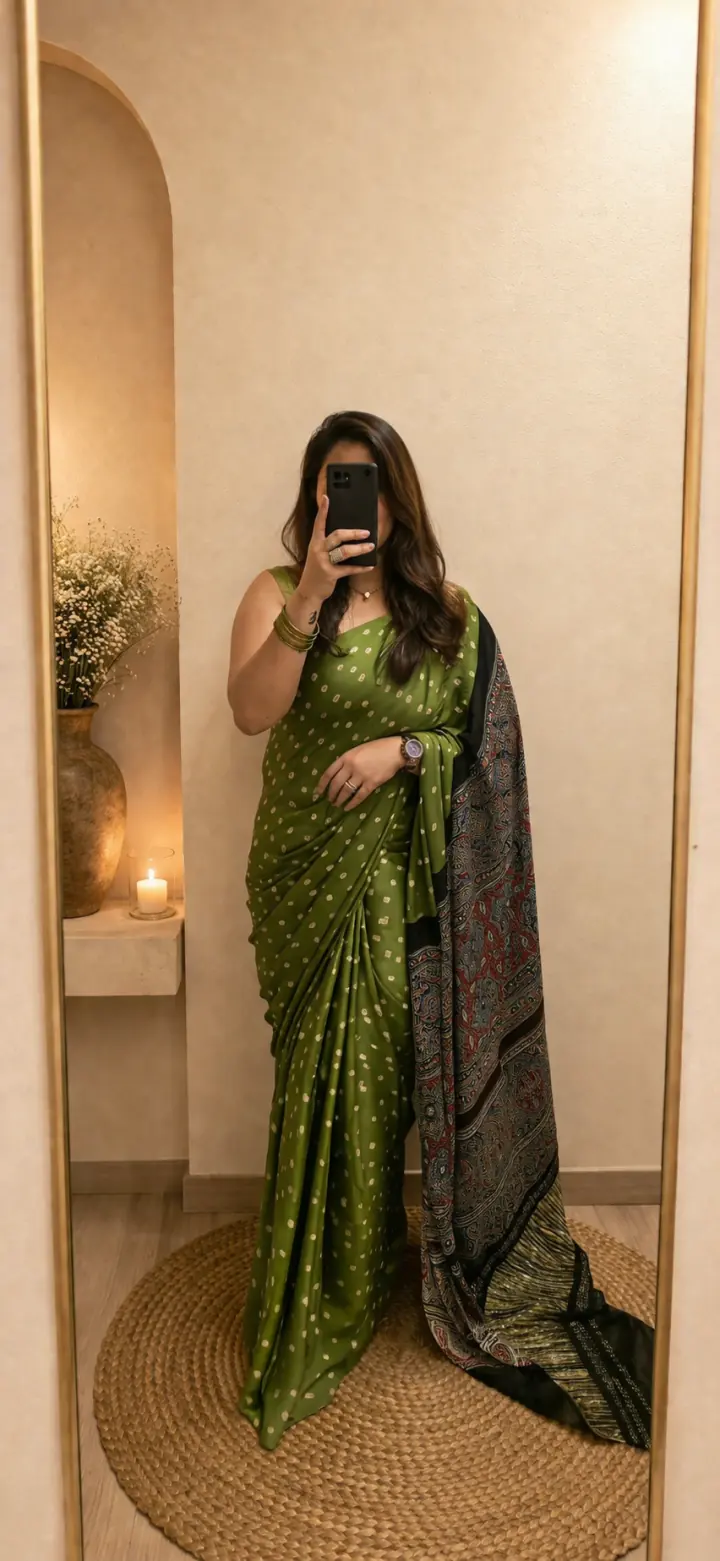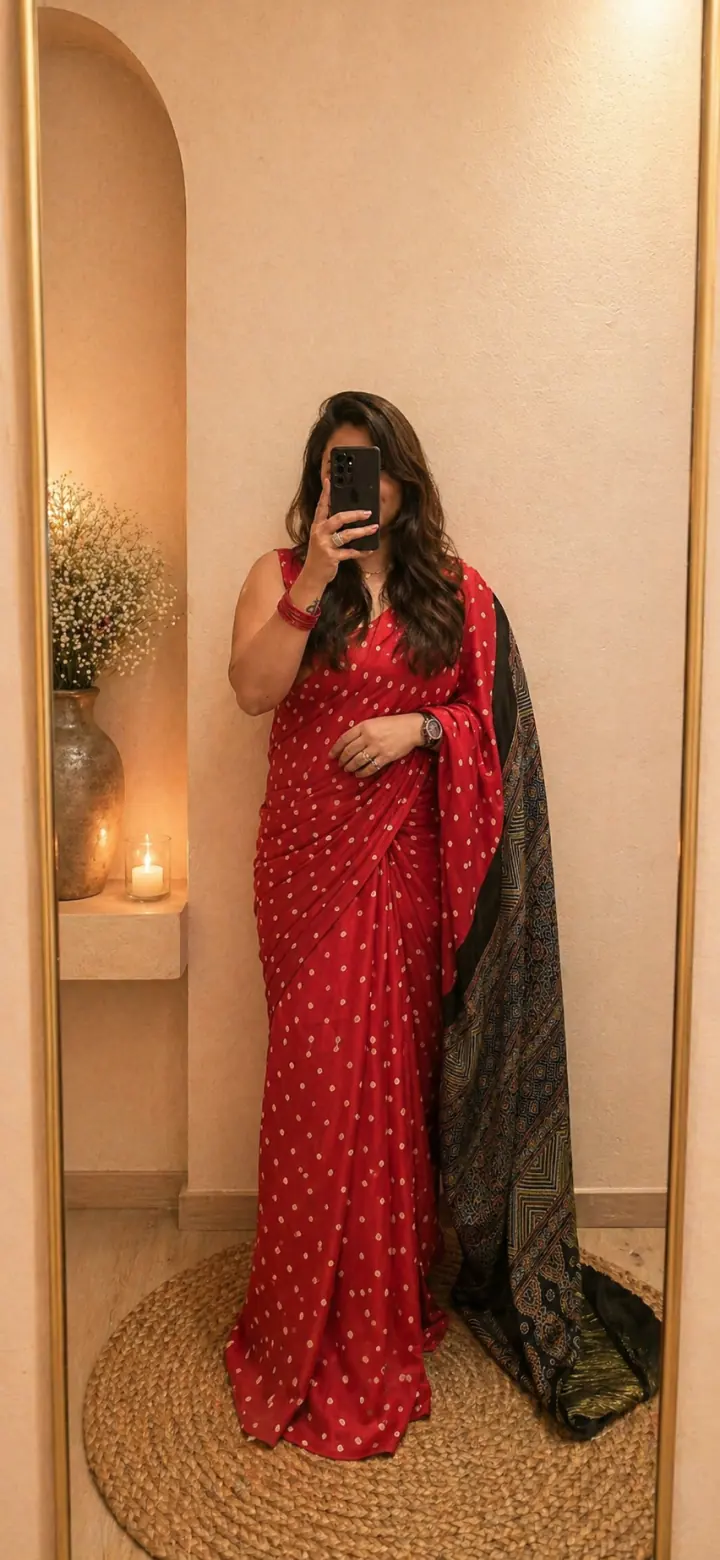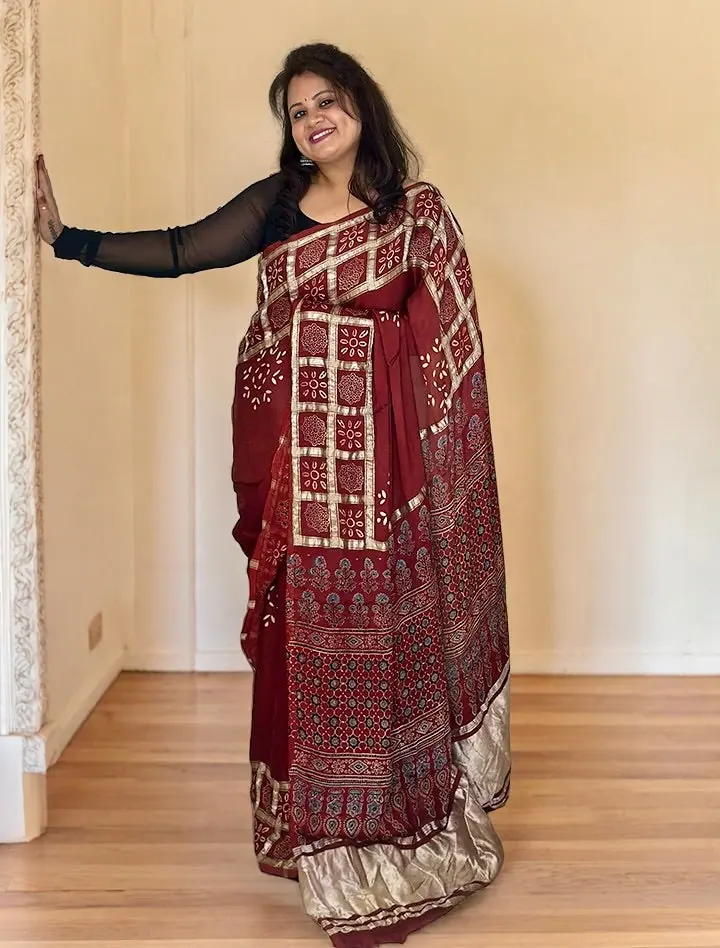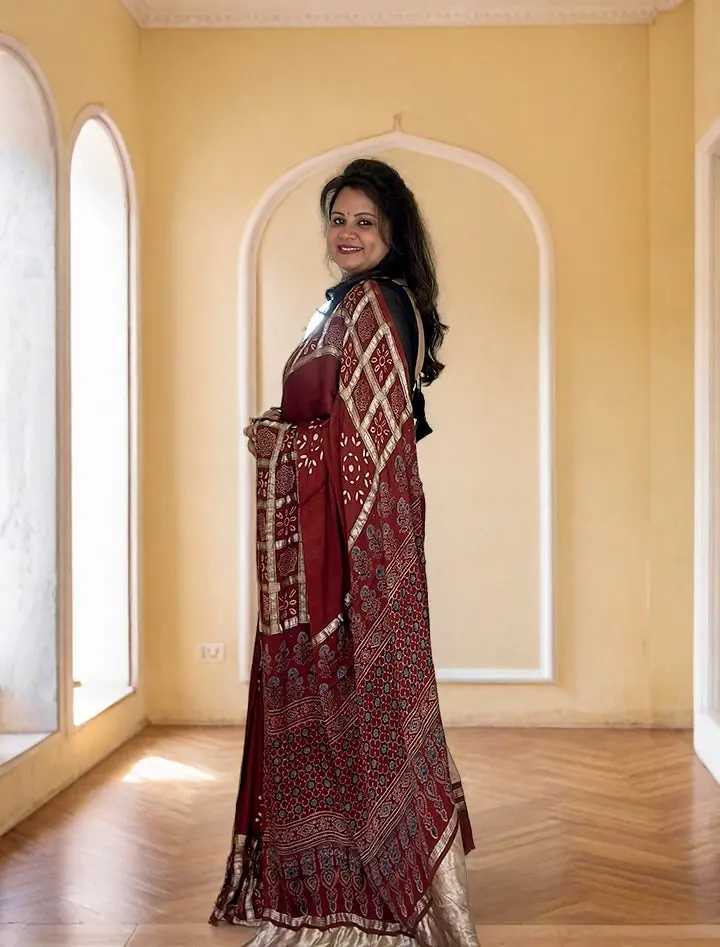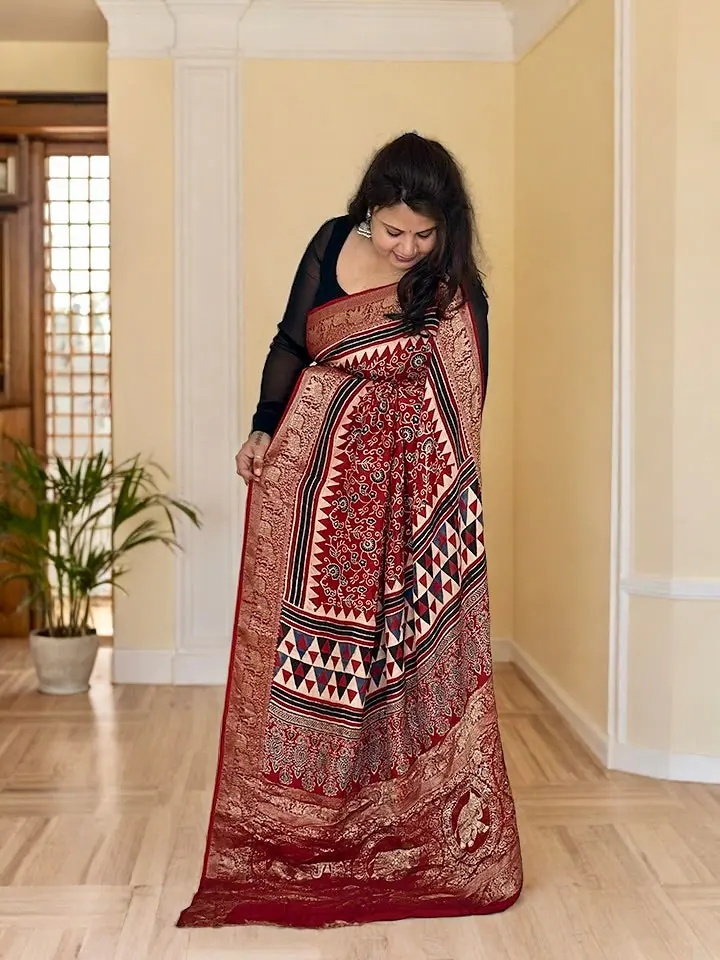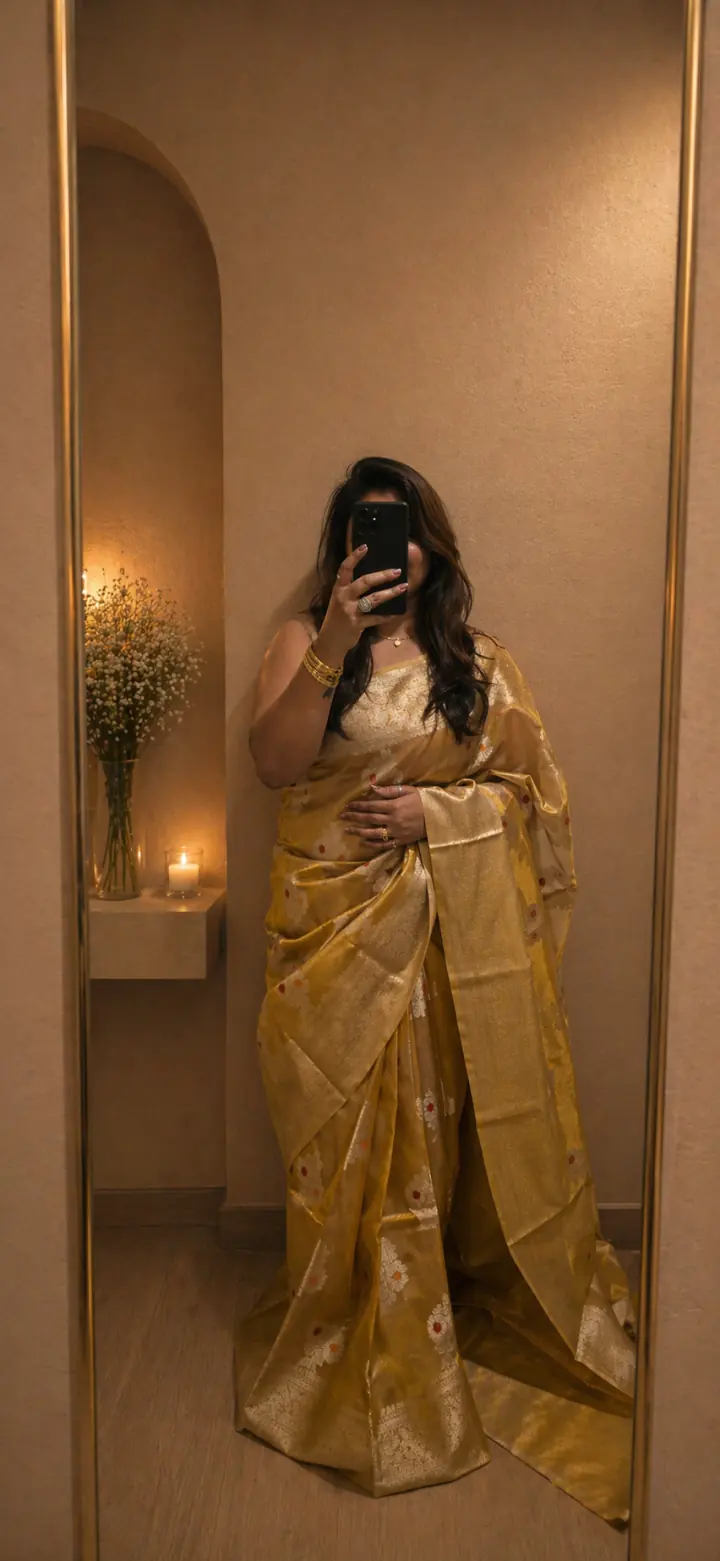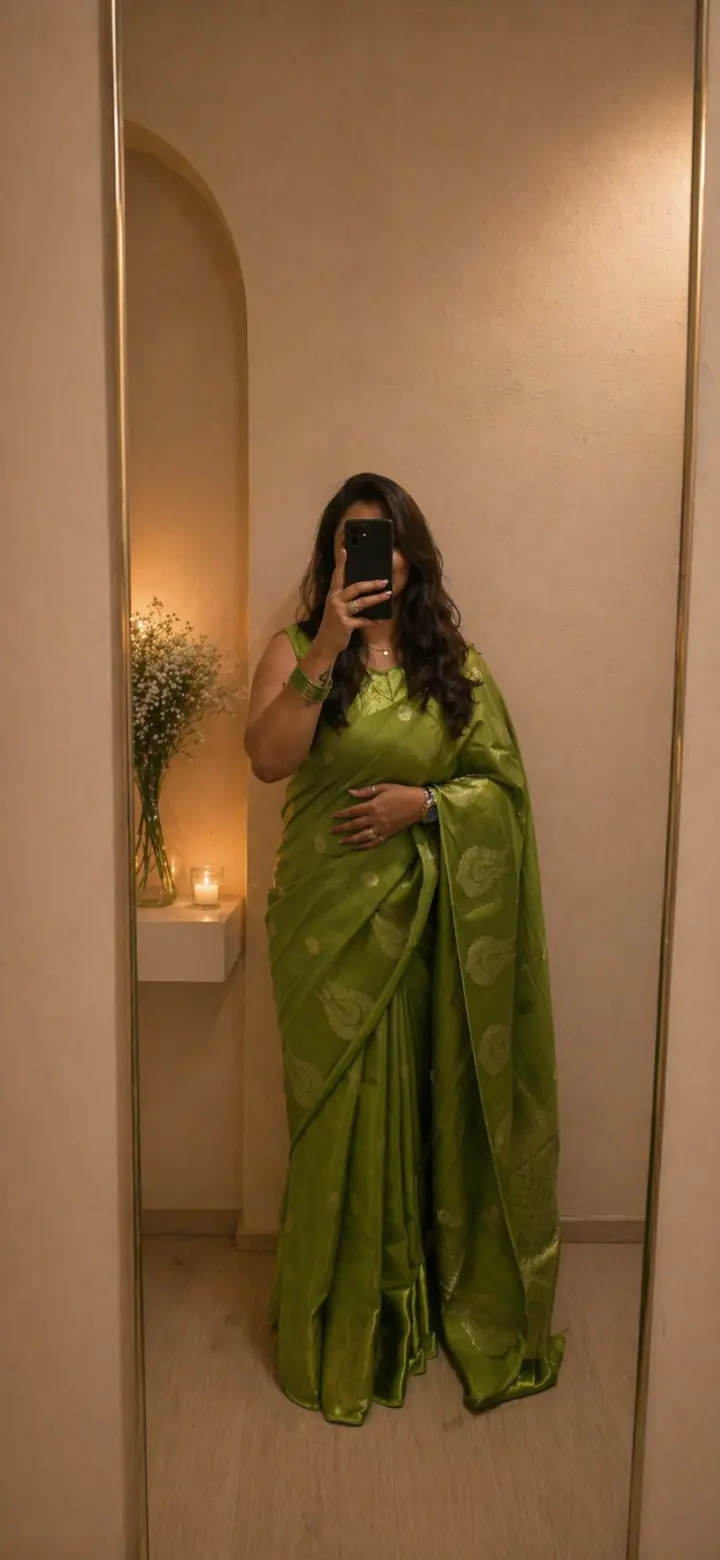
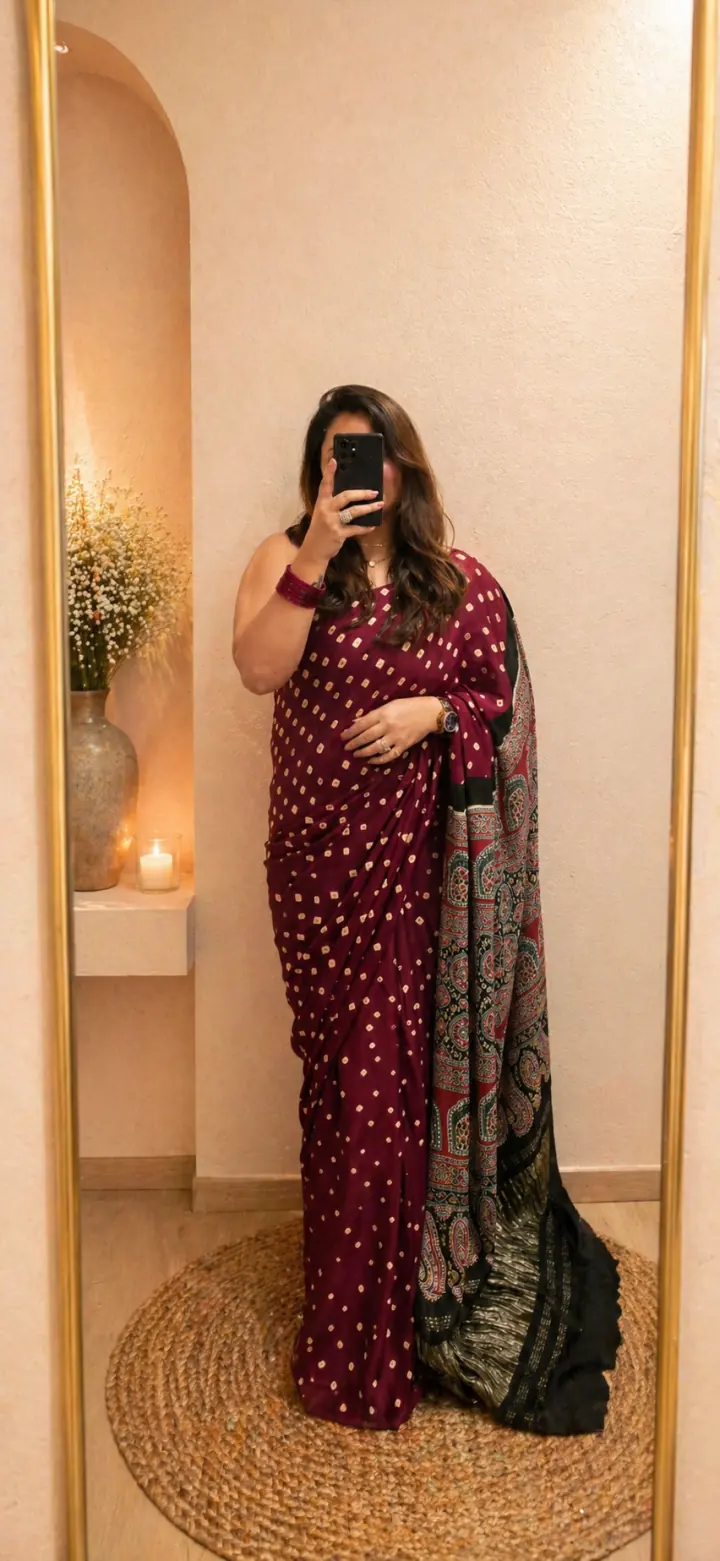
A Bandhani saree is made by pinching tiny points of cloth, binding each with thread and dyeing the fabric, so the tied spots stay undyed. Opening the ties reveals dots that form flowers, waves and grids. Everything is done by hand, which is why genuine pieces are slow to make and each one differs slightly.
What does Bandhani mean?
The name comes from the Sanskrit root bandh, which means to bind or tie. That is literally the technique: you bind the cloth before it meets the dye. Bandhani is one of the oldest resist-dyeing traditions in India, and the same root is behind the English word bandanna. Popular accounts date the craft anywhere from ancient times to the first millennium, but these origin stories vary widely, so it is more honest to say Bandhani has a very long history in western India than to quote a precise year.
Where is Bandhani made?
Gujarat and Rajasthan are the two best-known homes. In Gujarat, two production centres stand out: Jamnagar in the Saurashtra region and the villages and towns of Kutch. The Khatri community has long been the main custodian of the craft in Kutch, and Kutchi work is widely regarded as especially fine. Jamnagari Bandhani is also registered as a Geographical Indication. Rajasthan has its own related traditions, including Leheriya, which we come to below.
Eeshani is a Bengaluru label, and its founders hand-pick limited pieces from printers and weavers in Kutch and Varanasi, so Kutch craft is part of the range. Our Bandhani sarees page collects the current edit.
How is Bandhani made?
1. Marking the cloth
The cloth is washed and prepared, then the design is outlined, often in a washable colour, so the workers know where each point sits. The marking decides the overall layout: where the dots cluster, where the lines run, and where the plain areas remain.
2. Pinching and tying
This is the heart of the craft. A worker pinches a small piece of cloth at each marked point, lifts it into a tiny peak, and binds it tightly with thread. A single saree can need many thousands of individual ties. The work is precise and tiring, and it depends on trained fingers, often using a fingernail or a small tool to lift the cloth. A bound point is protected, so dye cannot reach it.
3. Dyeing from light to dark
Dyeing moves from light colours to dark. The first dye goes on a light base, such as yellow. If the design needs more colours, the cloth is dried, some ties are added or opened, and it goes into a deeper dye. The ties stay in place while the cloth soaks, so areas protected at an earlier stage keep the earlier colour. Working light to dark is a rule of dyeing, because a darker colour covers a lighter one but not the other way round.
4. Opening the ties
At the end, the threads are removed. The cloth opens with a gently crinkled, puckered texture where each tie was, and a small dot of undyed or earlier-dyed cloth. That texture is part of the beauty, and you can feel it with your fingertips.
What patterns and colours do you see?
Bandhani designs build from simple dots into larger forms. A small cluster becomes a flower, rows of dots become waves or stripes, and grids hold motifs inside squares. Different regions and families have their own named patterns, and the names vary from one source to another, so it is better to look at the design than to rely on a single word.
Colours are strongly associated with occasion and place. Red, maroon and saffron-leaning shades are widely loved for weddings and festivals in Gujarat, while green, blue and pink are popular for celebrations and daily dressing. A plain body with a bold pallu, such as the Bandhani modal silk in tomato red, is a more modern way to wear the craft.
Bandhani vs Leheriya
People often confuse the two because both are tie-dye. The difference is in the technique and the result.
- Bandhani is made of tied dots. The cloth is pinched and bound at individual points, so the pattern is made of spots and clusters.
- Leheriya is a Rajasthani technique that produces stripes. The cloth is rolled diagonally from one corner to the other and then tied at intervals, so after dyeing it shows wave-like diagonal lines.
- Mothra is a related pattern where Leheriya stripes cross in two directions, giving small diamond shapes.
If you see dots, you are almost certainly looking at Bandhani. If you see diagonal stripes, it is Leheriya.
What is Gharchola?
Gharchola is a traditional Gujarati wedding saree that combines woven checks with Bandhani. A grid of zari lines divides the cloth into boxes, usually in a set number such as nine, twelve or fifty-two, and each box carries tied dots or a small motif. It is traditionally worn in red and related shades. If you like the structured look, our Gharchola sarees page shows the current edit, and the modal silk saree with a Gharchola border is a good place to start.
How to spot genuine hand-tied Bandhani
No test is perfect, but these cues help.
- Feel the texture. Real Bandhani has small raised, puckered dots where the ties were. A flat print that imitates dots feels smooth.
- Check the irregularity. Hand-tied dots vary slightly in size and spacing, while printed dots repeat identically down the cloth.
- Look at the centre of each dot. A hand-tied dot usually has a small dimple or a darker ring around a lighter centre. A print shows a uniform shape.
- Turn it over. The pattern should be visible on both sides, since the dye soaked through the cloth.
- Ask the seller. A reliable seller can tell you where the work was done and whether the dots are tied or printed.
Be wary of unusually low prices for a saree with dense, even Bandhani. The work is labour-intensive, and genuine fine tying costs more than a simple print. The reverse is not a guarantee, though. A high price does not prove hand tying, so rely on the cloth itself.
How to style a Bandhani saree
Bandhani already offers pattern, so let the rest be simple.
- Choose a blouse in a plain colour picked from the saree, such as maroon, black or cream.
- For a mixed-craft look, combine Bandhani with a block-printed pallu. Both the green and the maroon Bandhani modal silk pieces pair dots on the body with an Ajrakh pallu. Our guide to Ajrakh print explains how the printed end is made.
- Keep jewellery light for a dense Bandhani and bolder for a plainer one.
- For a festival, try a deep shade; for a wedding as a guest, a softer one. See our festive sarees and wedding guest sarees pages for more ideas.
Caring for a Bandhani saree
- Read the care label. Silk, modal and blends with print or embellishment are usually safest dry cleaned.
- Do not stretch the dots flat. The puckered texture is part of the craft.
- Press on the reverse at a low setting through a cloth, and avoid ironing hard over the dots.
- Dark reds and maroons can release dye, so keep them away from light fabrics the first few times.
- Store folded in cotton or muslin, away from sunlight and plastic. Our silk saree care guide covers storage in more detail.
You can also browse the Modal Silk collection and the Signature collection for related pieces. Prices across Eeshani run from ₹1,799 to ₹6,299, we ship worldwide, and you can return a saree within three days.