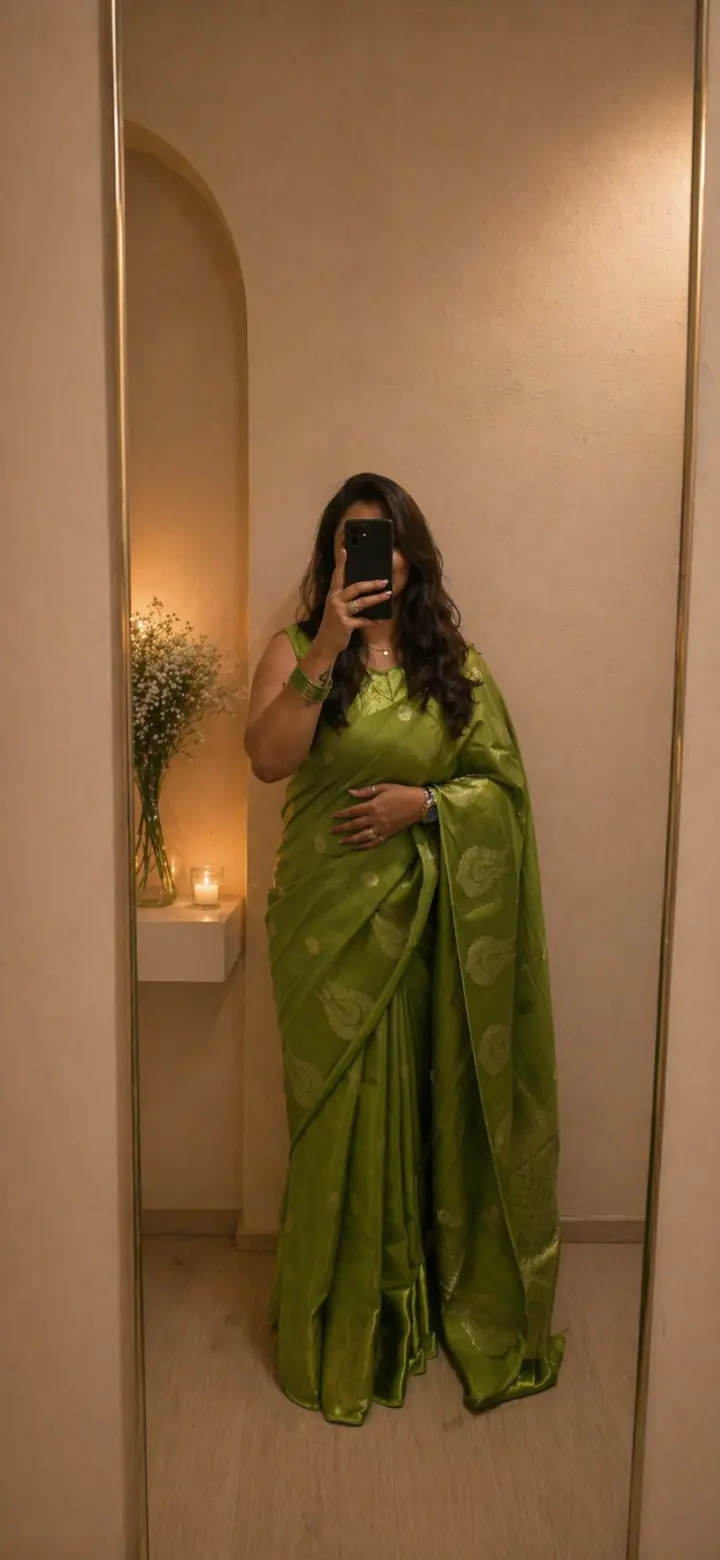
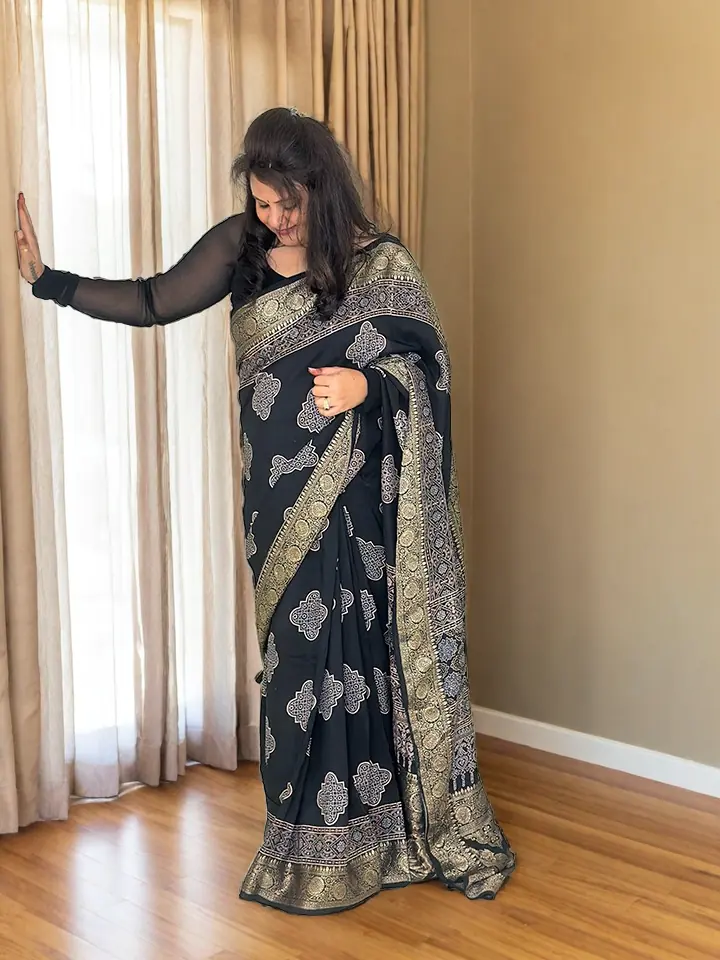
Dola silk is a lightweight, lustrous saree fabric with a firm hand and a smooth, glossy fall. The name is a trade term rather than a strict fibre standard, so composition varies: some cloths are mostly silk and others blend silk with other yarns. Its structure makes it a favourite base for block prints, borders and zari.
What is dola silk?
Ask five sellers what dola silk is and you may hear five answers, because there is no single, legally fixed definition of the name. In practice, "dola" describes a finish and feel: a smooth, fine cloth with a noticeable sheen, a slightly firm hand and enough body to hold a pleat. You will see it used in Varanasi-style weaves, in plain-bodied sarees with decorated borders, and as a base for printing.
Composition is where you need to pay attention. Retailer guides describe dola as a blend rather than a single fibre. Some cloths are largely silk, some mix silk with viscose or other yarns, and some lean on synthetics for a stable, glossy surface. None of these is automatically a flaw, but each behaves differently, so the fibre content is the first thing to check. If a listing says only "dola silk", ask. A good seller will tell you what is in the cloth.
How does dola silk look and feel?
- Sheen: noticeable and usually clean and bright rather than matte. It catches light on the folds, which makes pleats look defined.
- Hand: smooth, slightly crisp, with more body than a soft modal or a mul cotton.
- Weight: light to medium. It is easier to carry through a long evening than heavy brocade, though it feels more substantial than a very fluid fabric.
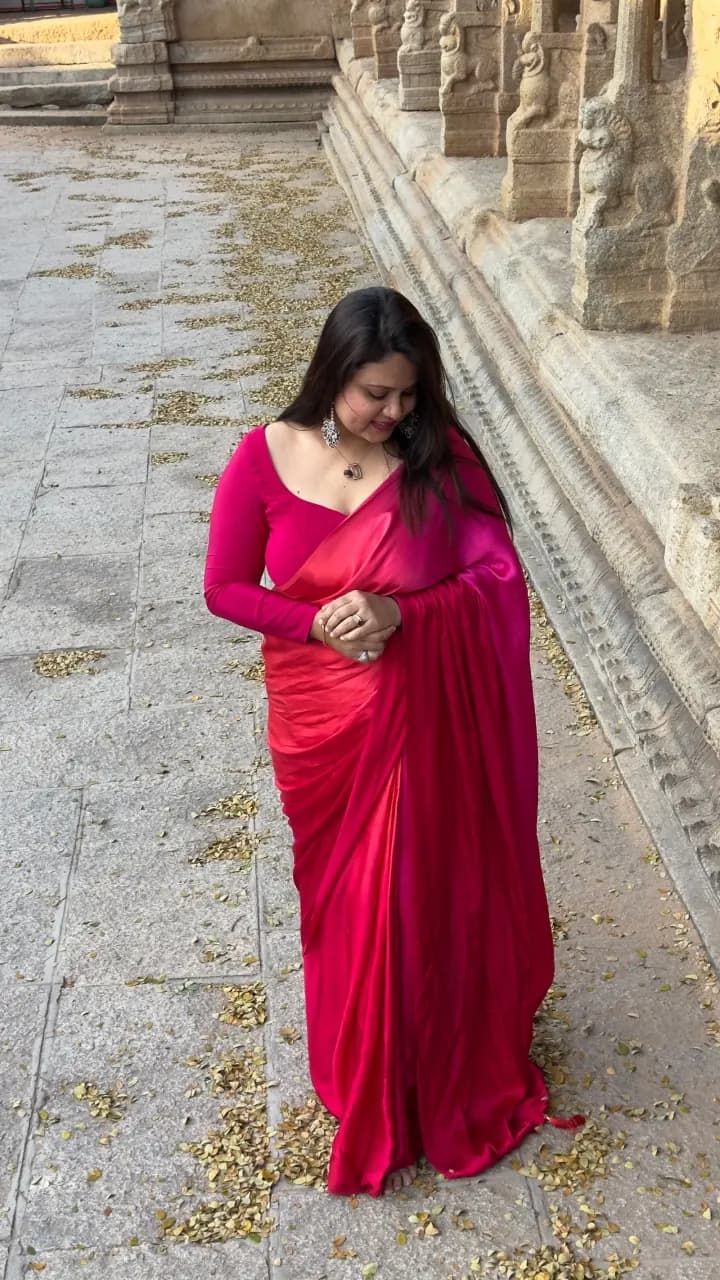
- Drape: structured. It falls in clean lines and holds a shape, instead of clinging or pooling.
That combination makes dola look dressed up without the weight of a traditional brocade. It is a useful middle path for people who want presence but do not want to feel burdened.
Dola silk vs modal silk
The two are often placed side by side because both have a silk-like look, but they feel different.
| Dola silk | Modal silk | |
|---|---|---|
| Hand | Smooth, slightly firm | Soft, fluid |
| Drape | Structured, holds pleats | Flowing, relaxed |
| Sheen | Brighter, more polished | Gentler, more even |
| Weight | Light to medium, more body | Light and airy |
| Best for | Festive and formal evenings | Daily wear, office, warm weather |
If you tend to feel restricted by stiff fabrics, modal may suit you better. If you like a sharp pleat and a sculpted pallu, dola is easier to control. Our guide on modal silk versus pure silk explains how modal behaves in more detail.
Why dola suits Ajrakh and other crafts
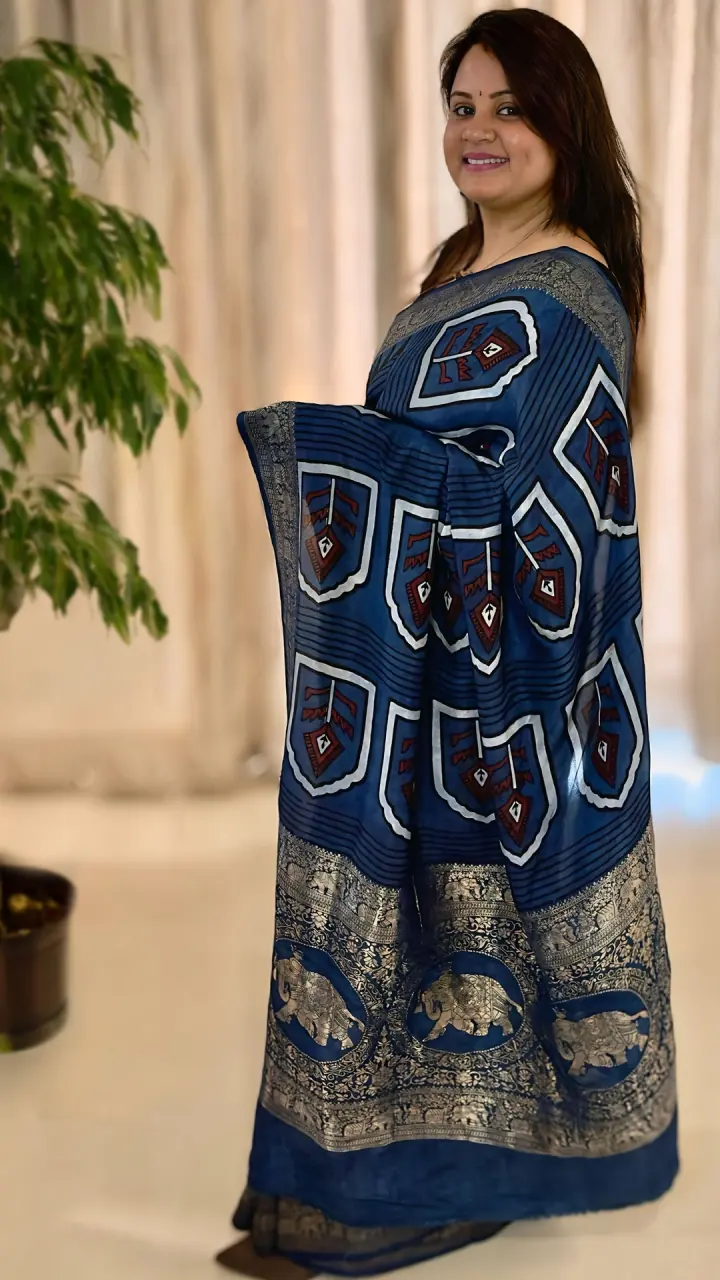
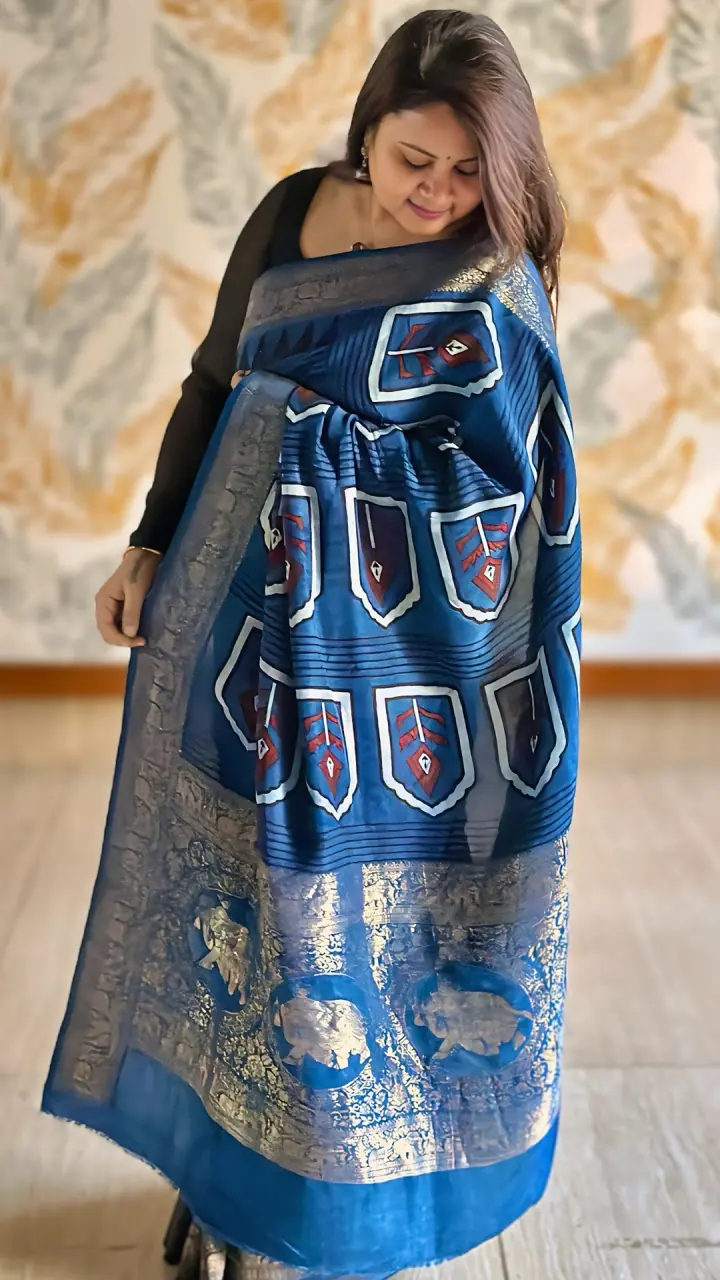
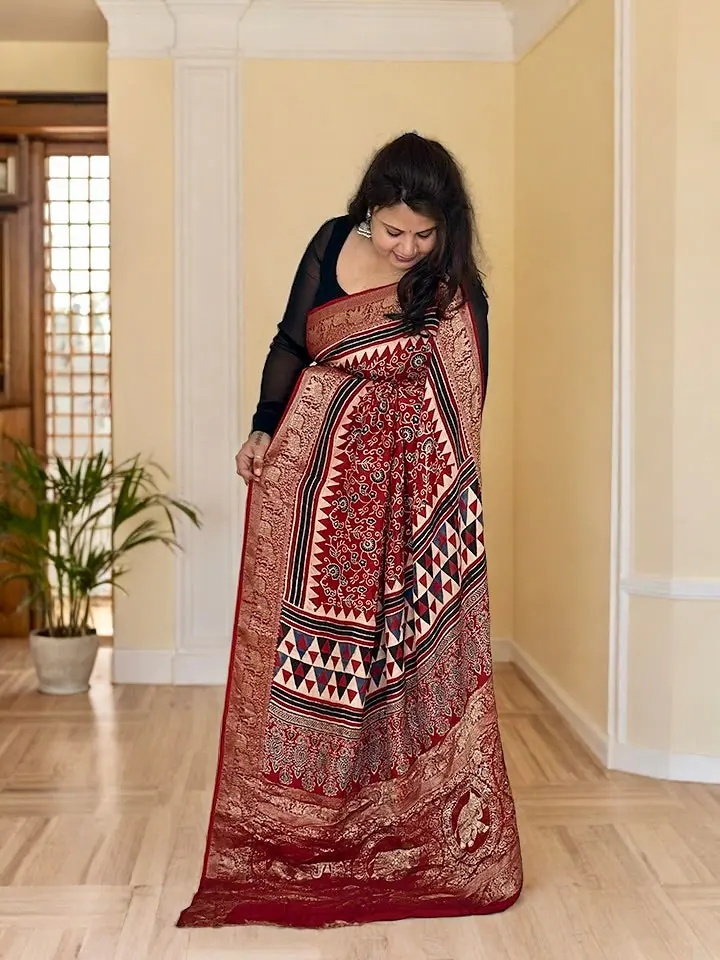
Ajrakh is a block-printed, resist-dyed craft of Kutch, and its geometric patterns look striking on a surface with some lustre because the colours seem to glow. Dola's smooth, tight surface also takes fine lines well, which helps intricate printing look crisp. You can read how the technique works in our guide to Ajrakh print.
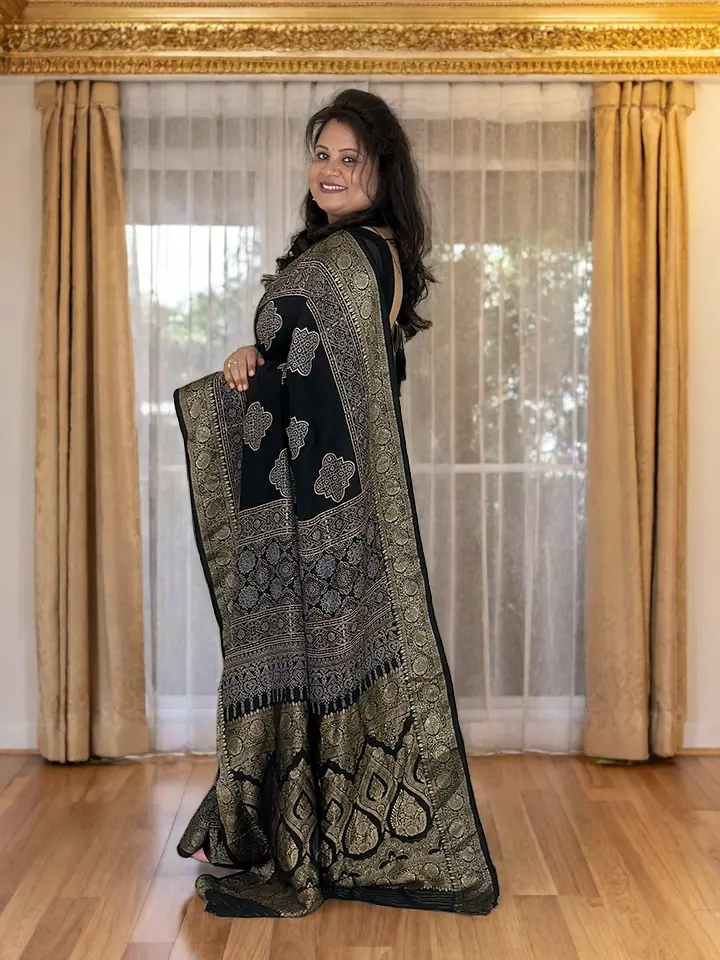
Dola is also a good carrier for zari and woven borders. Thin metallic thread sits cleanly on the surface rather than disappearing, and the cloth's body supports a decorated pallu without sagging. When you choose a saree with a decorated end, look at how the pallu hangs: it should fall straight, with the pattern sitting evenly across your shoulder.
What to look for when you buy
- Fibre content. Ask for it in writing. If silk is part of the blend, ask in what proportion.
- The reverse side. On printed pieces, check how the colour behaves on the back. Hand-block printing usually shows through; a surface print looks paler.
- The weave. Hold the cloth to the light. It should look even and tight, without thin patches or slubs you didn't expect.
- The pallu and border. Check that the print or weave is continuous and not misaligned at the joins.
- Dye behaviour. Deep colours such as black and maroon are beautiful but can release a little dye in early cleaning, so read the care guidance.
- The blouse piece. Check whether it is included, its length and whether it matches in sheen.
How should you style it?
Dola's structure makes styling straightforward.
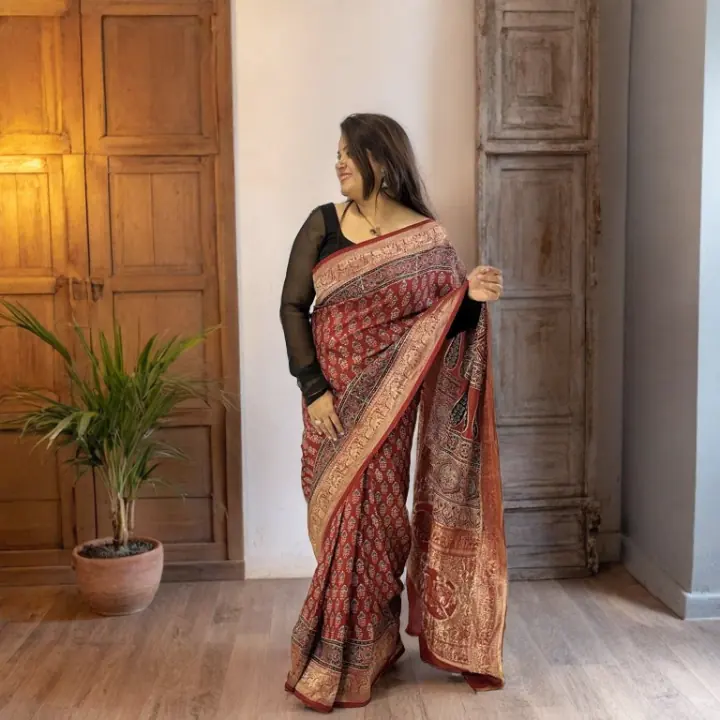
- For a festival: a deep colour such as maroon or black with a printed pallu. The black dola silk Ajrakh saree is a good example of how a dark body and a patterned end look sharp without effort. Our festive sarees page gathers similar pieces.
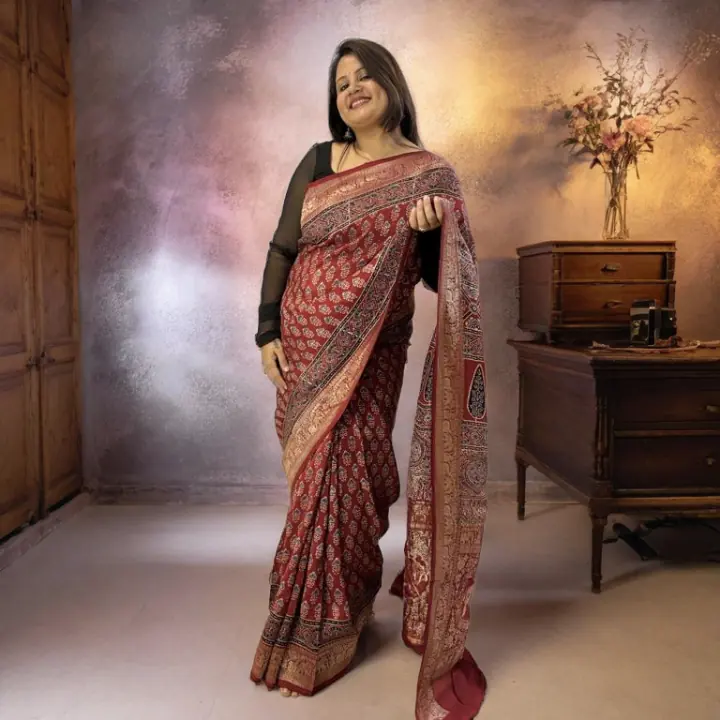
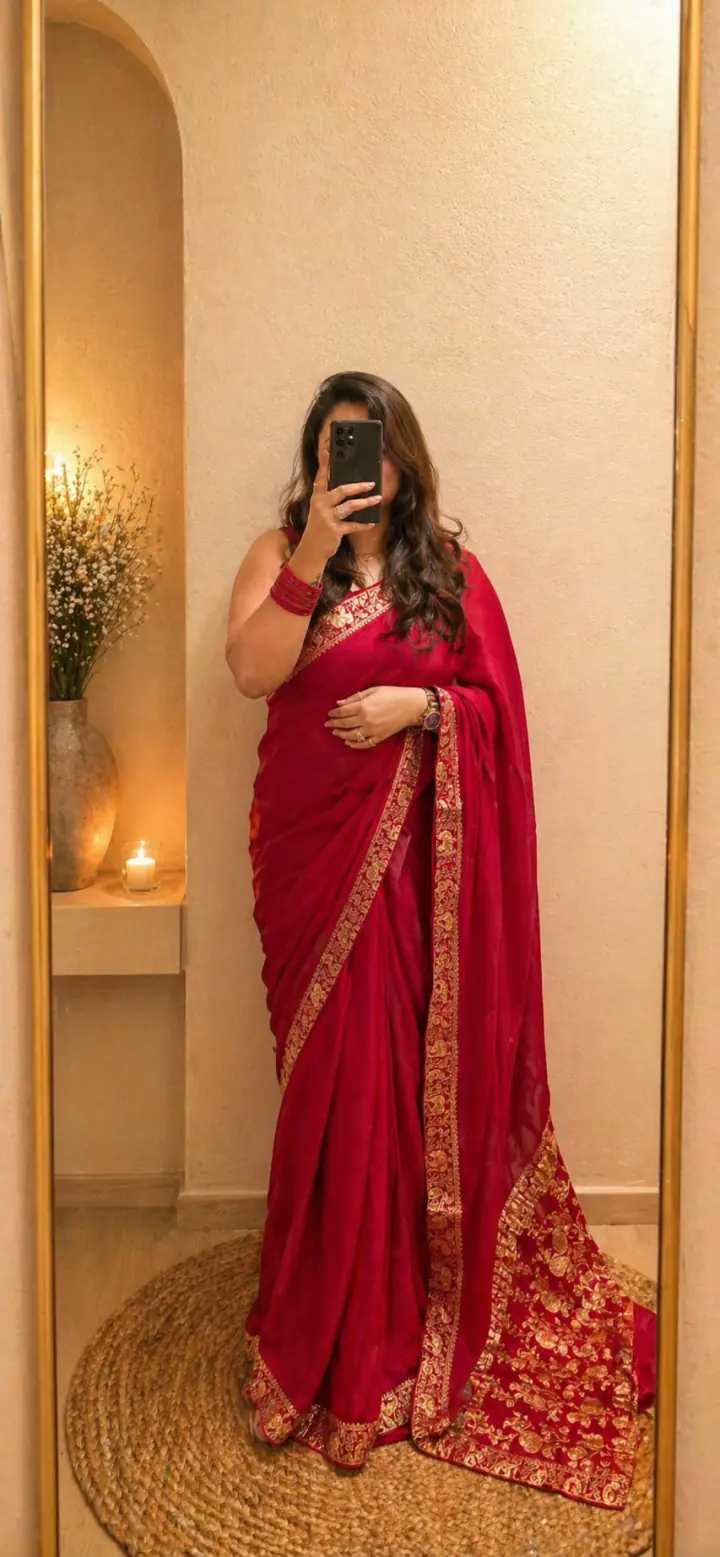
- For a wedding guest look: a single statement saree with a plain blouse and minimal jewellery. The Dola Silk Ajrakh print saree and the red Ajrakh dola silk saree suit this brief; see more in wedding guest sarees.
- For a richer pallu: if you prefer an embroidered end, compare with the modal-based Nakshi pallu saree in red, and see all Nakshi sarees.
Pleat tightly and pin the pleats at the waist, because dola's slickness can let loose pleats slide. Use a safety pin at the shoulder to hold the pallu in place, and choose a petticoat that is a little firm and matches the body colour.
What does a dola silk saree cost?
Because composition varies, price varies too. Pieces that are mostly silk will cost more than blends, and printed, zari or hand-finished pieces cost more than plain ones. As a reference, Eeshani's whole range sits between ₹1,799 and ₹6,299, so there is room to compare fabrics at different price points. Judge value by what is in the cloth and the craft on it, not by the word "silk" in the title.
How do you care for dola silk?
Follow the care label, and when in doubt, dry clean.
- Dry clean first for printed or zari pieces. Water can dull the sheen and can disturb dyes and metallic thread.
- Avoid direct sunlight, which can fade colour and weaken the fibre.
- Iron on the reverse on a low setting with a cotton cloth between the iron and the saree, and keep the iron away from zari.
- Spray perfume before dressing, never on the cloth.
- Store in muslin or soft cotton, not plastic, and change the fold lines now and then so creases don't set.
Our silk saree care guide has the full routine, including storage and refolding.
Where to buy dola silk at Eeshani
Eeshani is a Bengaluru label, and its founders hand-pick limited pieces from printers and weavers in Kutch and Varanasi. Browse the Dola Silk Ajrakh collection or the wider Ajrakh sarees page, and compare with the Modal Silk collection if you want a softer fall. We ship worldwide, and you can return a saree within three days.