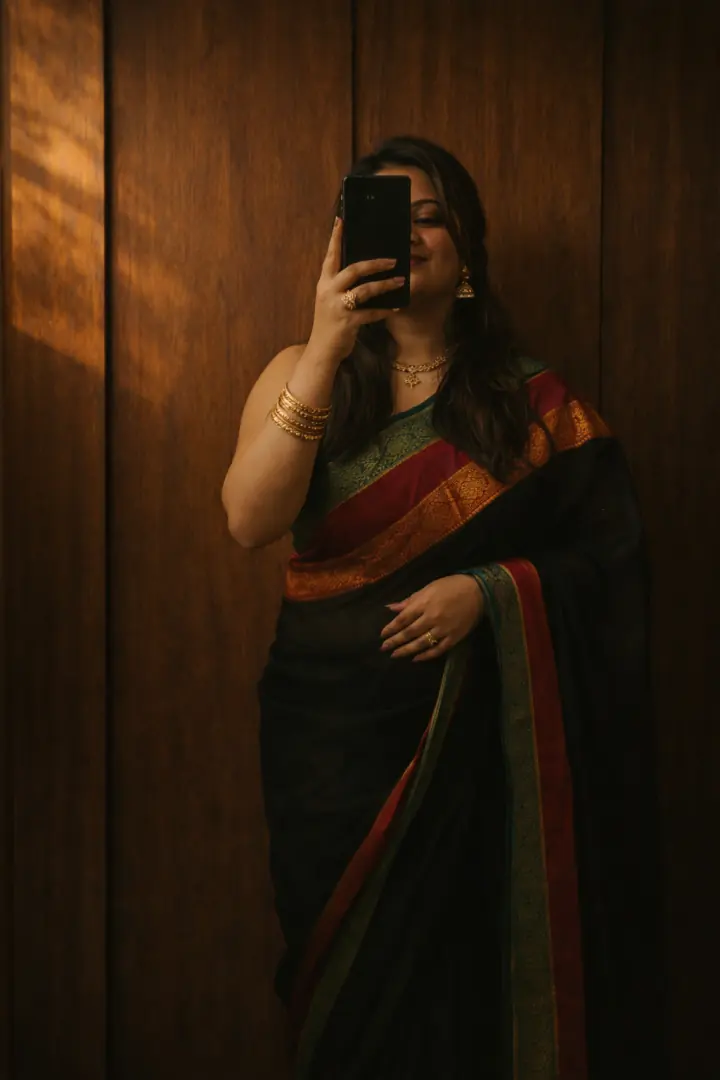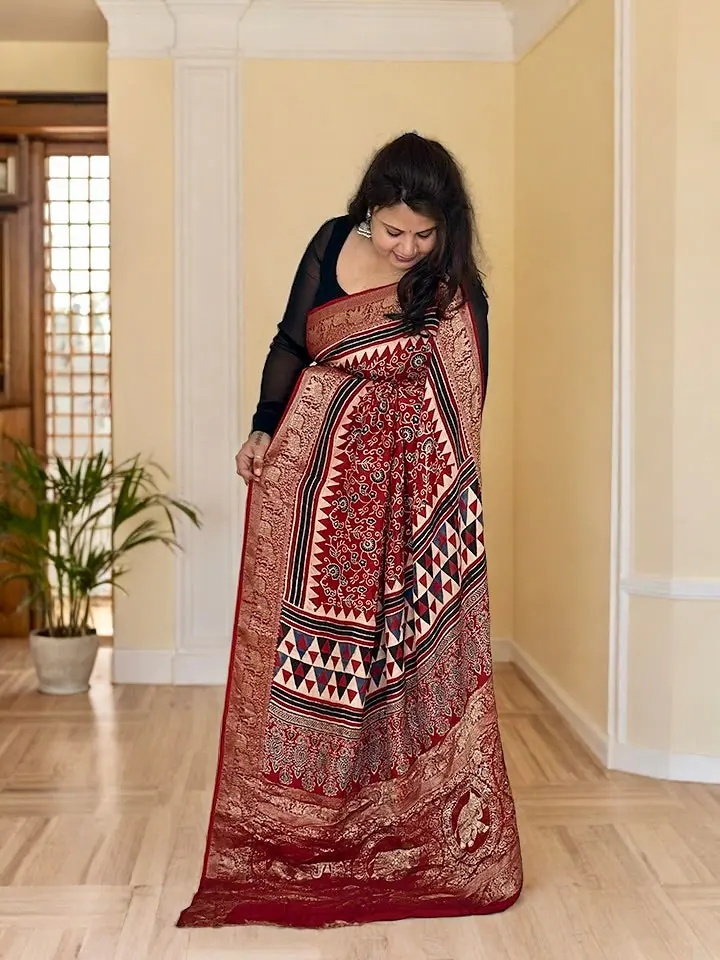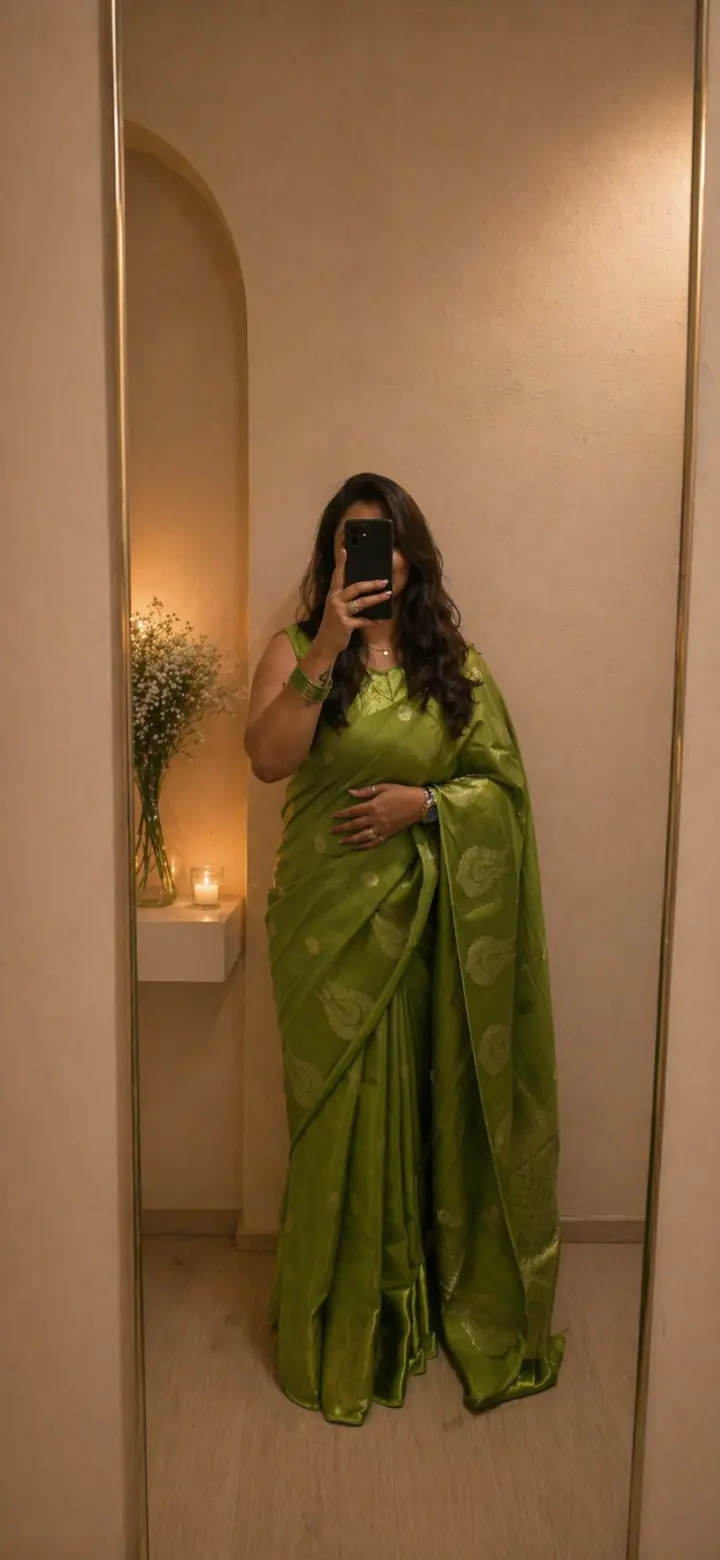
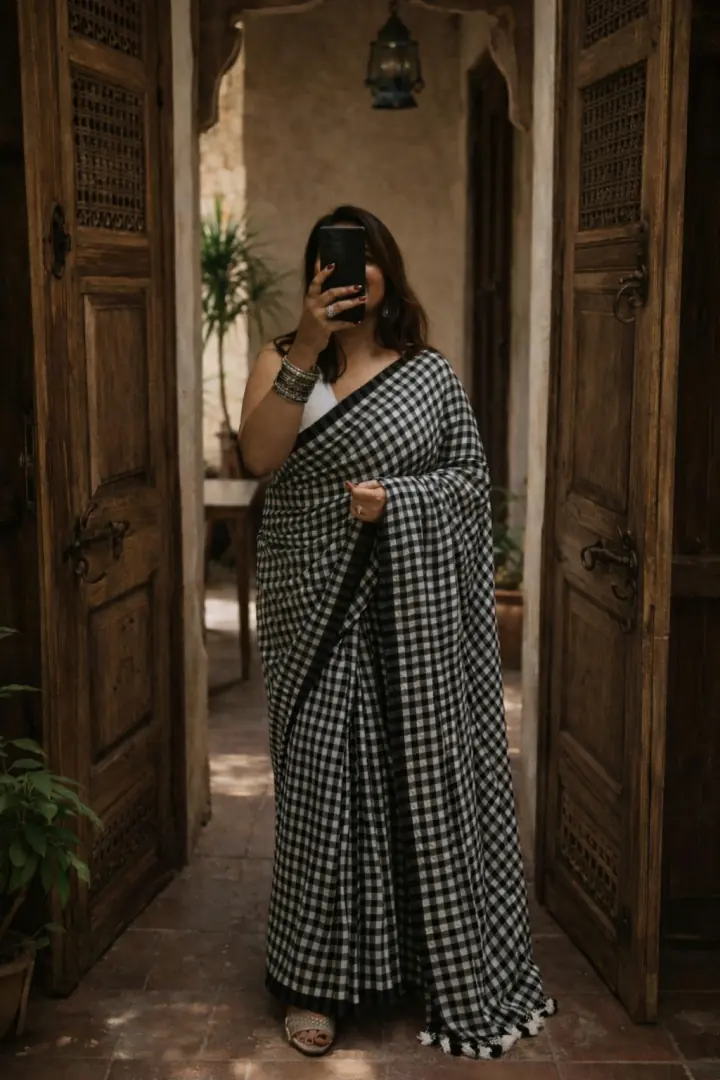
The best office wear sarees are light, breathable and easy to move in: mul cotton, plain or lightly woven cotton, and fluid modal silk. Choose solid or quietly patterned colours, a simple blouse with sleeves you can reach in, and a pre-pleated, well-pinned drape. Comfort and polish matter equally, because a saree you worry about all day won't look confident.
Why a saree works at the office
A saree has no rigid fit, so it adapts to your body across a full day, and it covers shoulders and arms without the layering of a jacket. It is also easy to dress up. A plain saree with a fresh blouse and a good belt looks as professional as most formal outfits, and the same piece can carry you straight to an evening event.
The challenge is practical, not stylistic. A workday means stairs, long meetings, commutes, weather and a lot of sitting. Every choice below is about making the saree behave through that.
Which fabric is best for an office saree?
Fabric decides how the day feels, so start here.
Mul cotton
Mul cotton is very fine and soft, light on the body and breathable. It suits warm cities and air-conditioned offices equally, and it softens the more you wear it. It crinkles, so it looks best in structured patterns such as checks or stripes that hide creases. Pieces like the mul cotton checkered saree in classic black and white or the mul cotton saree with a black dual-colour border give a crisp, businesslike look. If it is sheer, wear a matching petticoat.
Cotton
Everyday cotton is practical and affordable. Choose a smooth, closely woven one; stiff, heavily starched cotton can feel scratchy over a full day. Light stripes and checks work well.
Modal silk
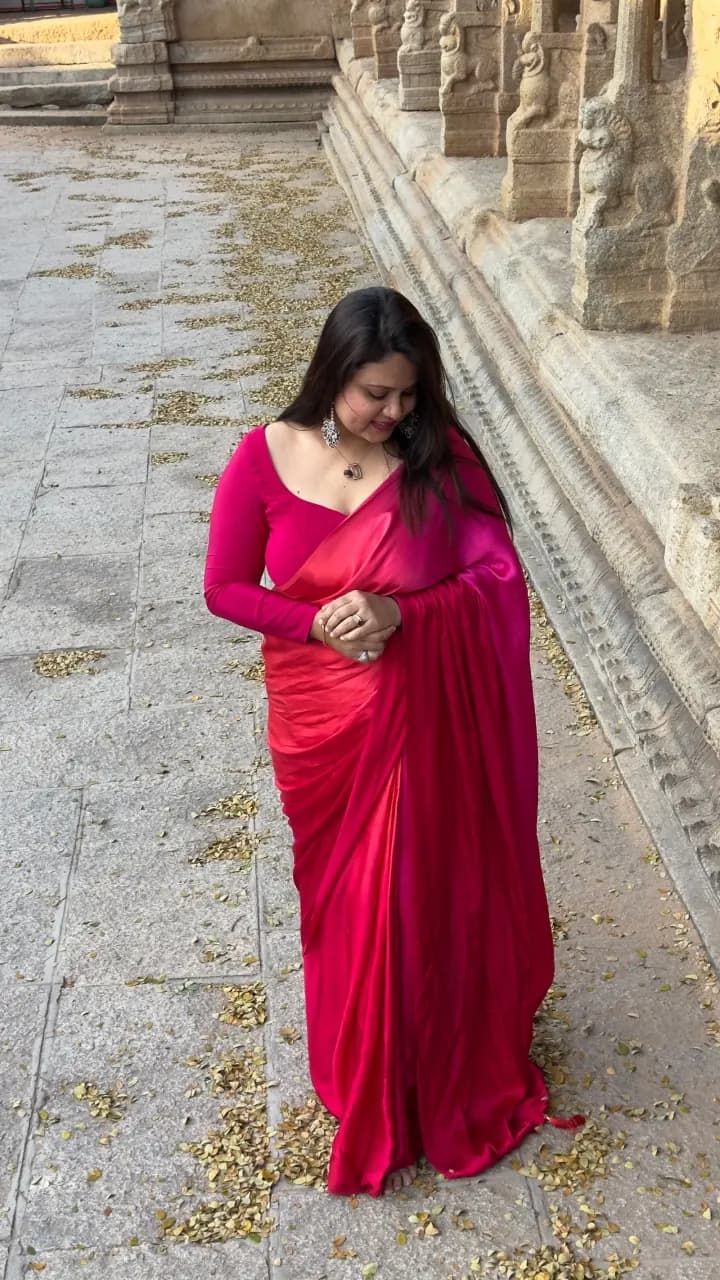
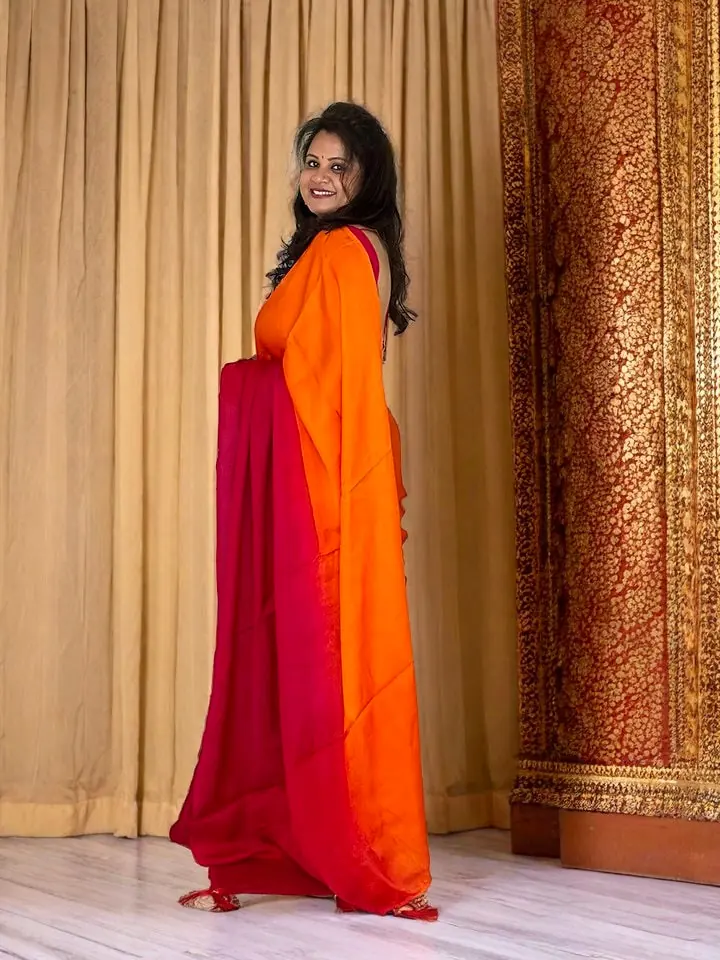
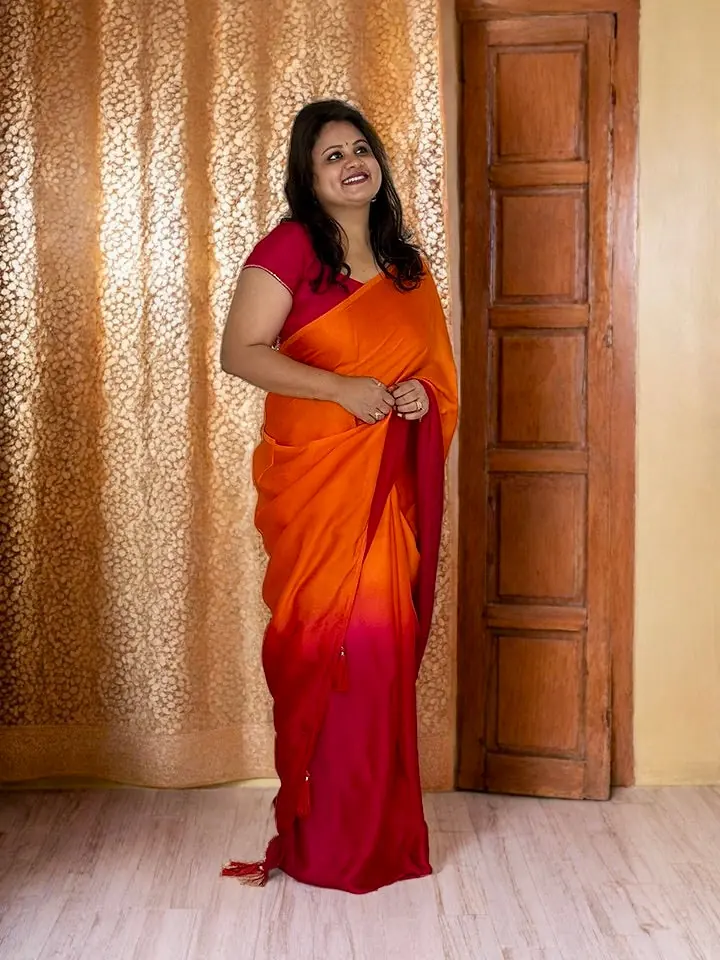
Modal has a fluid drape and a smooth, slightly sheeny finish, so it looks dressy without being fussy. It feels cool, doesn't cling, and falls in clean lines that photograph well. The pure modal silk saree and the modal silk plain ombre saree are strong choices for a presentation day. Our guide on modal silk versus pure silk explains why modal is often easier to wear than silk.
Pure silk and heavy weaves
These are glamorous but demanding. They suit formal events and special days more than a routine week, and they need more careful cleaning. If you wear silk to the office, choose a light one in a plain or lightly woven design.
What to avoid
Very sheer synthetics that cling, heavy brocades and stiff fabrics that make sitting uncomfortable are usually the wrong choice for a full workday.
What colours work best?
- Solids and quiet patterns: navy, charcoal, grey, deep green, wine, rust, mustard, soft pink and cream all read polished.
- Contrast borders: a clear border or a simple pallu gives a saree presence without busy decoration.
- For video calls: very fine stripes and tiny checks can shimmer on camera, so for a day full of calls choose larger checks, bolder stripes or solids. Jewel tones tend to look rich on camera, while very pale colours can wash out under bright light.
- For first impressions: wear a deeper shade for meetings where you want authority and a softer one for collaborative days. This is style advice rather than a rule, so go with what makes you feel at ease.
Which blouse should you choose?
Comfort and reach matter more here than anywhere else.
- Sleeves: elbow or three-quarter sleeves cover the arms and move easily. Full sleeves give a formal look in cooler weather.
- Neckline: boat, round, collar or high necks look composed and stay in place when you lean forward.
- Fit: a blouse that is snug but not tight lets you raise your arms and type comfortably. Test it by lifting your arms above your head before you buy or stitch.
- Fabric: cotton or a cotton blend blouses are cooler than satin ones in a long day.
- Colour: a plain blouse in a matching or contrasting solid is the easiest approach. Contrast works best when the saree has a plain body.
If you plan to wear sarees to work regularly, keep a few ready-stitched blouses in neutral shades so you can mix and match.
How should you drape it for work?
A functional drape prevents the fuss that makes people abandon sarees.
- Wear a fitted petticoat in a matching colour, tied at the right height so the saree doesn't catch under your feet. The hem should skim the top of your shoes.
- Make firm, even pleats, about five to seven, and tuck them at the navel. Pin them to the petticoat with a safety pin so they stay put when you sit.
- Keep the pallu shorter for office. Pin it at the shoulder and again at the back so it doesn't slip when you move. Some people pin it to the blouse, others tuck a corner into the waist for extra security.
- Pre-pleat the night before if you are in a hurry. A well-pinned pre-pleated drape can be put on in minutes.
- Try the "wrap and tuck" method on days when you are walking a lot: bring the pallu across the body once, tuck the edge at the waist, and let the rest fall free.
- Check the back in a mirror before you leave. Lines should be smooth and the pleats straight.
Footwear matters too. Pick comfortable flats, block heels or loafers; you will spend more time walking than you expect.
How many sarees does an office wardrobe need?
You do not need dozens. A rotation of five or six pieces handles a normal week:
- two or three cotton or mul cotton sarees in checks, stripes or solids;
- one or two modal silk sarees for important days;
- one saree with a bold border or pallu for a day when you want to stand out;
- one easy, neutral saree for travel or events.
A capsule like this avoids repeating the same saree in the same week and lets you vary blouses and accessories to change the look.
Accessories and finishing touches
Keep it simple: a watch, small earrings, a thin belt if you like a fitted look, and a work bag you are comfortable with. A belt or kamarbandh holds the pleats and pallu in place and gives a sharp waistline, but only wear it if you find it comfortable through the day.
Care for sarees you wear often
Wear and wash cycles are faster at the office, so follow these habits.
- Air your saree after each wear, then store it folded in cotton or muslin.
- Wash cotton and mul cotton gently, as the label directs, and iron them on a medium setting while slightly damp.
- Dry clean modal silk, silk and blended sarees as directed on the label, and avoid dripping or perfume on the cloth.
- Rotate your sarees, so none is worn two days in a row.
Our silk saree care guide has the full routine for silk and delicate fabrics.
Where to shop
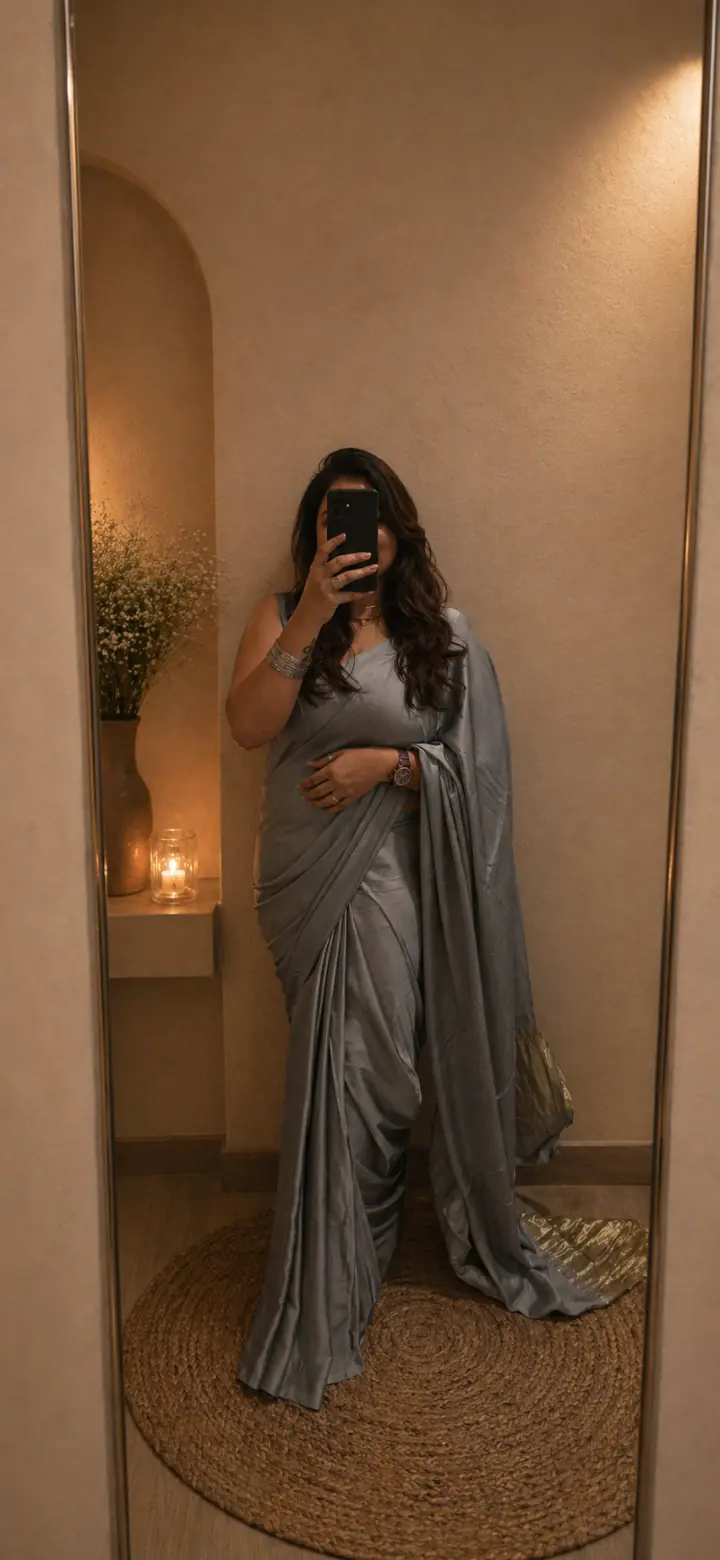
Eeshani is a Bengaluru label, and its founders hand-pick limited pieces from printers and weavers in Kutch and Varanasi. Browse the office wear sarees edit for pieces suited to a working week, the daily wear sarees page for easy everyday options, and sarees under ₹5,000 if you want to build a rotation on a budget. For a quiet detail at the pallu, try a Lagda Patti saree; the modal silk saree with a Lagda Patti pallu in grey is a restrained choice. Our Modal Silk collection and Summer collection are also worth a look. Prices run from ₹1,799 to ₹6,299, we ship worldwide, and you can return a saree within three days.