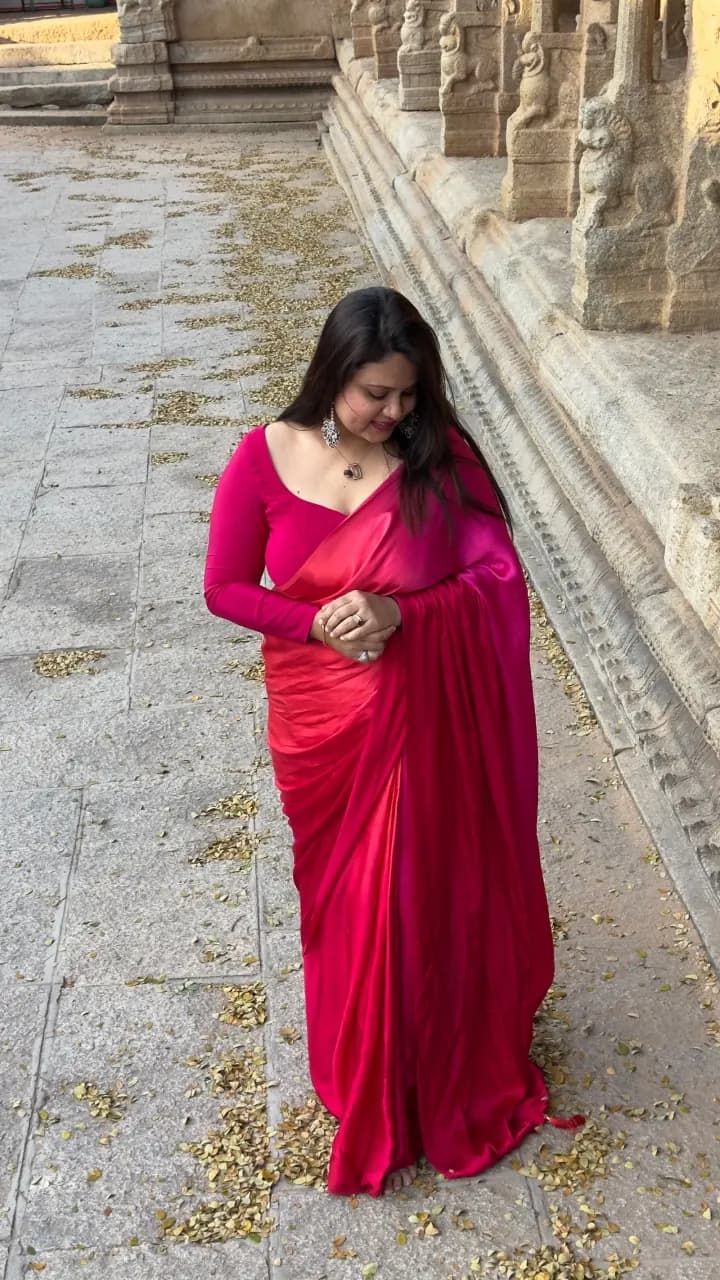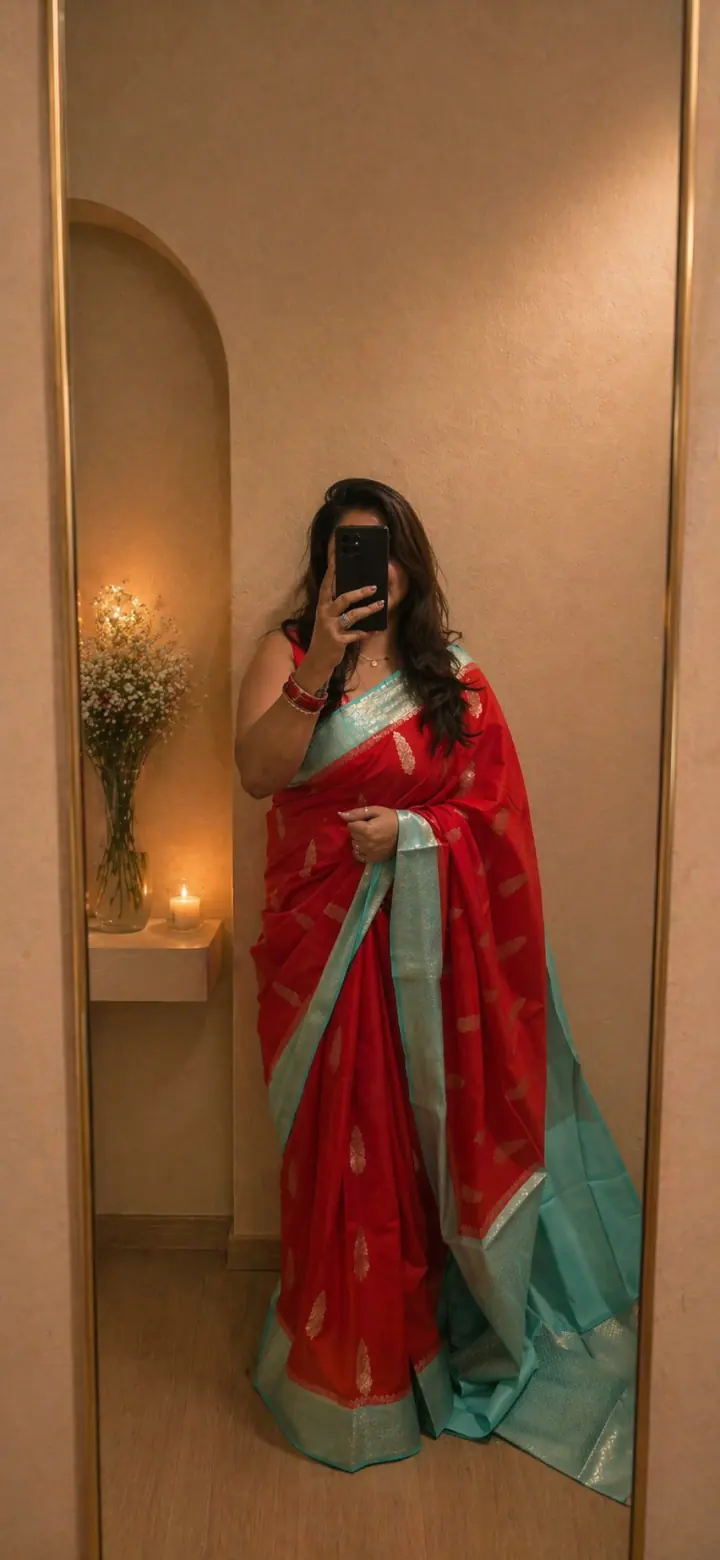
You can buy sarees online from India and have them shipped abroad. Expect longer delivery than within India, possible import tax or duty set by your own country's rules, and a blouse piece that a local tailor will need to stitch. Check the seller's shipping policy, confirm who pays duties, and measure for the blouse before you order.
Can you buy sarees from India while living abroad?
Yes, and many people do, because sarees are light, durable and easy to pack. Buying online lets you reach craft and label-led pieces that are hard to find locally, such as hand-block printed Ajrakh, Bandhani and Banarasi weaves. The trade-offs are delivery time, customs handling and fit, and each can be managed with a little planning.
Eeshani is a Bengaluru label, and its founders hand-pick limited pieces from printers and weavers in Kutch and Varanasi. We ship worldwide, and prices run from ₹1,799 to ₹6,299. You will see all prices in Indian rupees, so the amount charged to a foreign card is converted by your bank at its own rate.
How does international shipping work?
A parcel leaves India with an international courier or postal service, travels by air, clears Indian export formalities, then clears customs in the destination country before final delivery. Each stage adds time, and the slowest step is often customs, not the flight.
Things worth checking before you order:
- The seller's shipping policy. Look at estimated delivery windows, tracking and what happens if a parcel is delayed. Eeshani's shipping policy is the place to confirm current international fees and delivery estimates, and there are country pages for the USA, the UK and the UAE.
- Tracking. A reliable seller gives you a tracking number and tells you which carrier handles delivery in your country.
- Address and phone number. Customs and couriers often contact you before delivery. A correct phone number and postcode prevents delays.
- Time buffer. If you need the saree for a particular event, order well ahead. Don't plan around the shortest estimate.
- Returns. Ask how returns work internationally. Eeshani accepts returns within three days, so inspect your parcel promptly on arrival.
What are customs and duties?
Customs is the border check on goods entering a country. Duty is a tax charged on imports, and many countries also charge a sales tax such as VAT or GST on imported goods. Whether you pay, how much, and who collects it depend on your country's rules, the declared value of the parcel and how the clothing is classified.
Two general points:
- The rules change. Several countries have revised low-value import rules recently, so what a friend paid last year may not match what you pay now.
- The importer is responsible. Even if the seller doesn't collect tax, the rules usually still apply to the person receiving the parcel, and couriers may collect payment on delivery or before releasing it.
Always check your government's official guidance. What follows is a general picture as of October 2026, not tax advice.
USA
For years, small parcels entering the United States could pass duty-free under an exemption for low-value shipments. That exemption has been suspended for shipments from all countries since August 2025, so parcels that once cleared without tax can now attract duty. How much depends on the classification of the goods and on the trade measures in force at the time, and the rules for postal shipments have been changing. Check the US Customs and Border Protection e-commerce FAQ for the current position, and ask your carrier whether it collects duty before delivery or on arrival.
UK
The UK has a customs duty relief for consignments valued at £135 or less, and for those parcels VAT is generally accounted for at the point of sale by the seller or marketplace. Above £135, duty and import VAT are normally due at the border, and VAT is worked out on the goods plus shipping and any duty. The government has announced plans to remove the £135 relief in the coming years, so check GOV.UK's tax and duty guidance before you order a larger parcel.
UAE
Imports into the UAE generally attract a customs duty of around five percent on most goods, plus five percent VAT, with a lower-value allowance that has changed from time to time. Couriers may add a clearance fee on top. Check the current threshold with your courier or with Dubai Customs or the customs authority of your emirate.
Elsewhere
Canada, Australia, Singapore and many other countries have their own thresholds and tax rules. Search for your national customs authority's guidance on "goods bought online from overseas".
Practical ways to avoid surprises
- Ask the seller who pays duties and whether the order is shipped duty-paid or duty-unpaid, and read the shipping policy for how Eeshani handles it.
- Keep the invoice. Customs may ask for it.
- Don't ask a seller to undervalue the parcel. It is illegal in most countries and can cause the parcel to be held or seized.
- Add a small buffer to your budget for tax and courier fees, so the total landed cost doesn't catch you out.
How do you handle blouse stitching abroad?
A saree is a flat piece of cloth, so it fits many people, but the blouse needs tailoring.
Option 1: a local tailor
Many cities with South Asian communities have tailors who stitch blouses quickly. Ask friends for recommendations, bring the blouse piece and a well-fitting blouse to copy, and allow a week or two for the first one plus a fitting.
Option 2: a readymade blouse
Ready-made blouses in standard sizes, including stretch or hook-front styles, are widely sold online and in South Asian shops. Match the colour in daylight, because shades differ under shop lights.
Option 3: a custom blouse service
Some online tailors ship stitched blouses internationally from your measurements. If you use one, give measurements in the format they ask for, and allow time for any alterations to cross the oceans twice.
Option 4: use a top you already own
For a casual or fusion look, a fitted crop top or bodysuit in a matching or contrasting colour works with most sarees.
What to check on the product page
Look at whether a blouse piece is included, its length, whether the colour matches the body of the saree, and how much fabric it leaves for a stitched blouse with sleeves. Check the product page rather than assuming. If the blouse piece is shorter than you need, tell your tailor before cutting.
Measurements to take
For a standard blouse, measure bust, underbust, waist, shoulder width, front and back length, sleeve length and armhole. Measure over the undergarments you plan to wear. If you can, copy an existing blouse that fits well: lay it flat and measure it, then give the tailor that blouse as a model.
How do you choose the right saree when you cannot touch it?
- Read the fabric and care details. Modal silk, dola silk, mul cotton and Banarasi weaves feel quite different. Our guides to modal silk versus pure silk and dola silk explain the differences.
- Study the photos. View every image, including the pallu and the border. Colours vary between screens, so treat the photo as a guide rather than a guarantee.
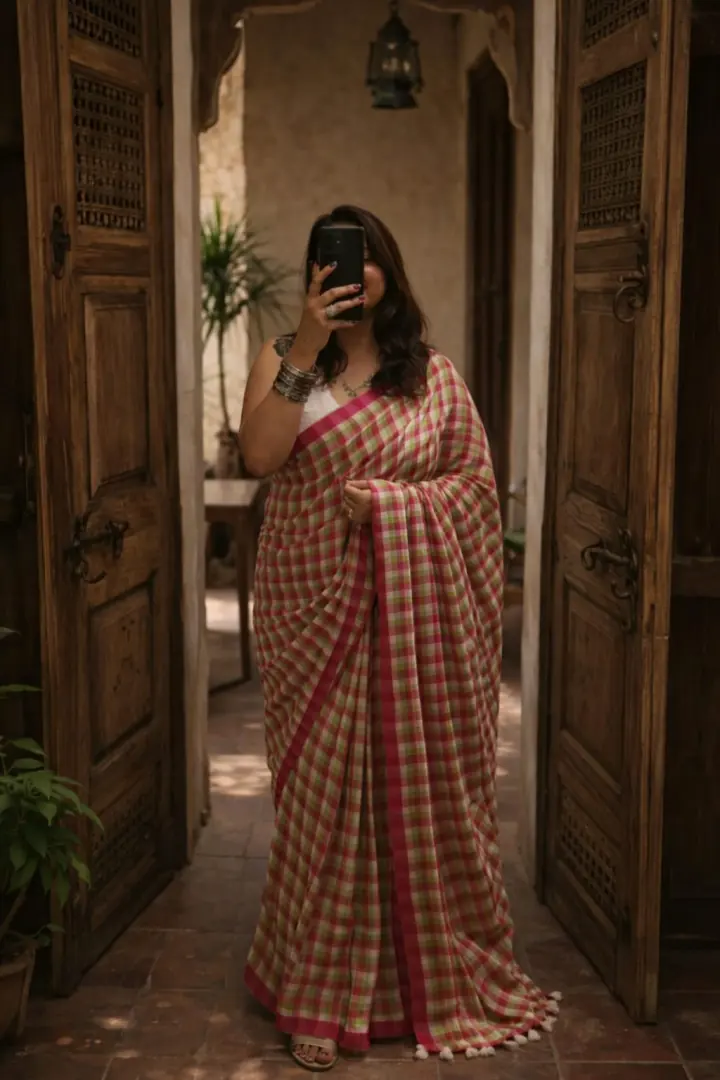
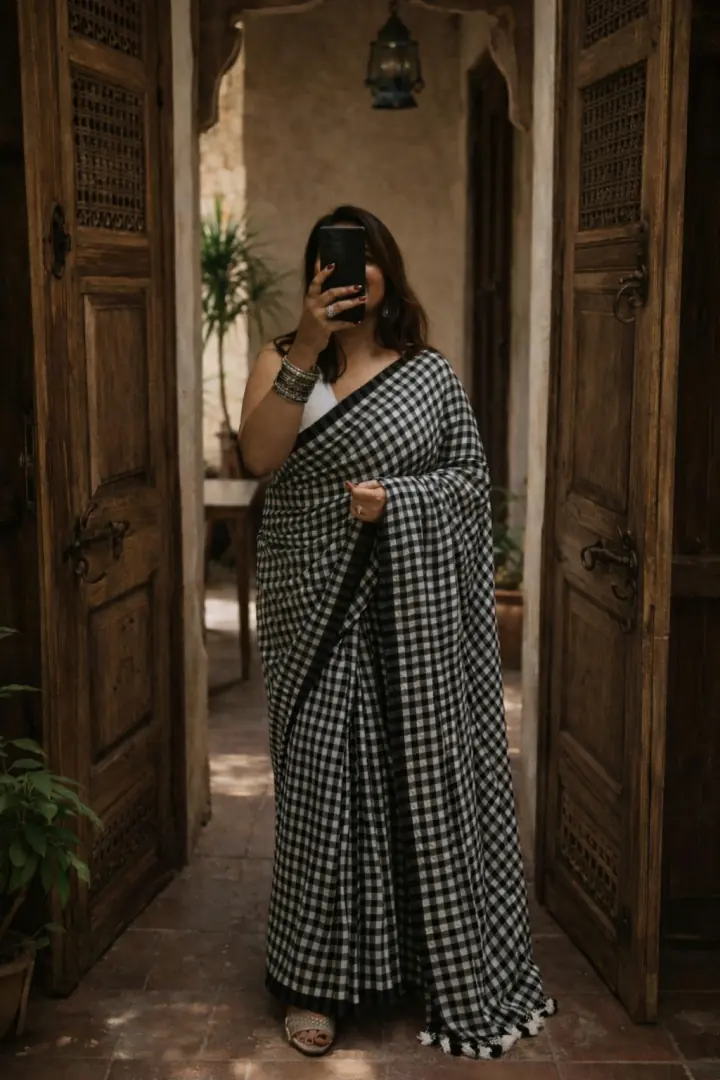
- Think about the climate. A light mul cotton such as the mul cotton checkered saree in blossom suits warm summers, while a modal silk or a viscose Banaras saree works for indoor events in colder months.
- Match the occasion. For weddings and festivals, see our wedding guest sarees and festive sarees. For work and everyday, see daily wear sarees.
- Allow time to return. If you need to send something back, three days goes quickly, so open the parcel and try the saree on as soon as it arrives.
What should you wear under a saree?
Most people wear a fitted petticoat in a matching or neutral shade, and a blouse. If you can't find a traditional petticoat abroad, a high-waisted skirt or shapewear in a skin tone works. Pins, a belt and a few spare safety pins are useful too. Our office wear guide has draping tips that apply anywhere.
Caring for a saree far from home
Climate, water and dry cleaners differ abroad. Find a dry cleaner who handles delicate or ethnic wear before you need one, and ask whether they can handle zari. Store sarees in muslin or cotton, away from sun and damp. Our silk saree care guide covers the details.
Start browsing
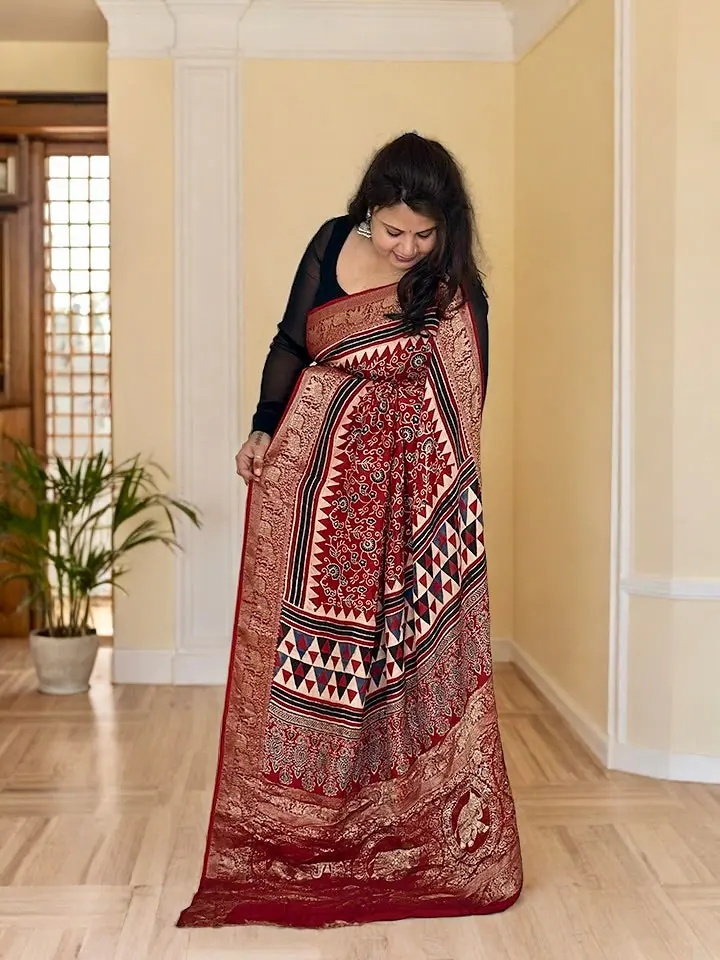
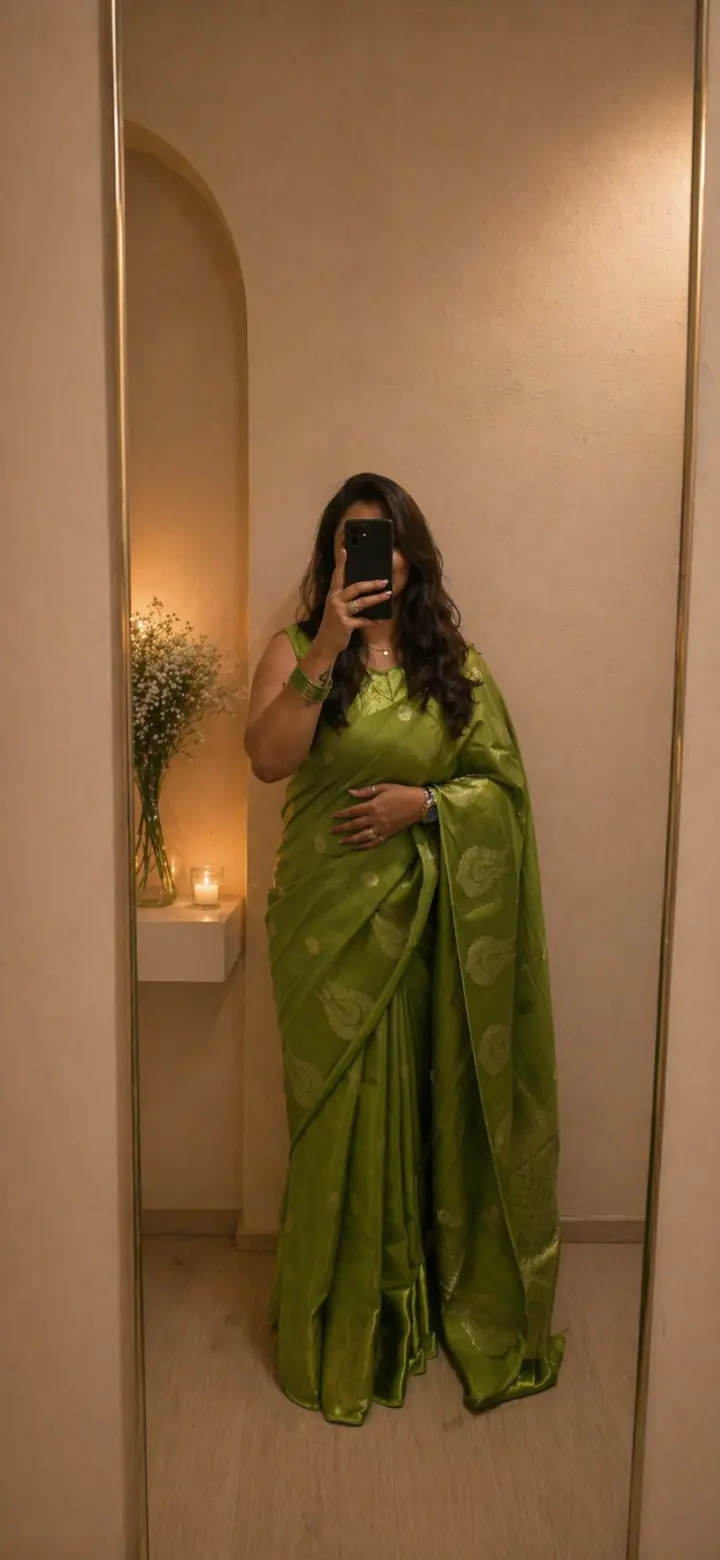
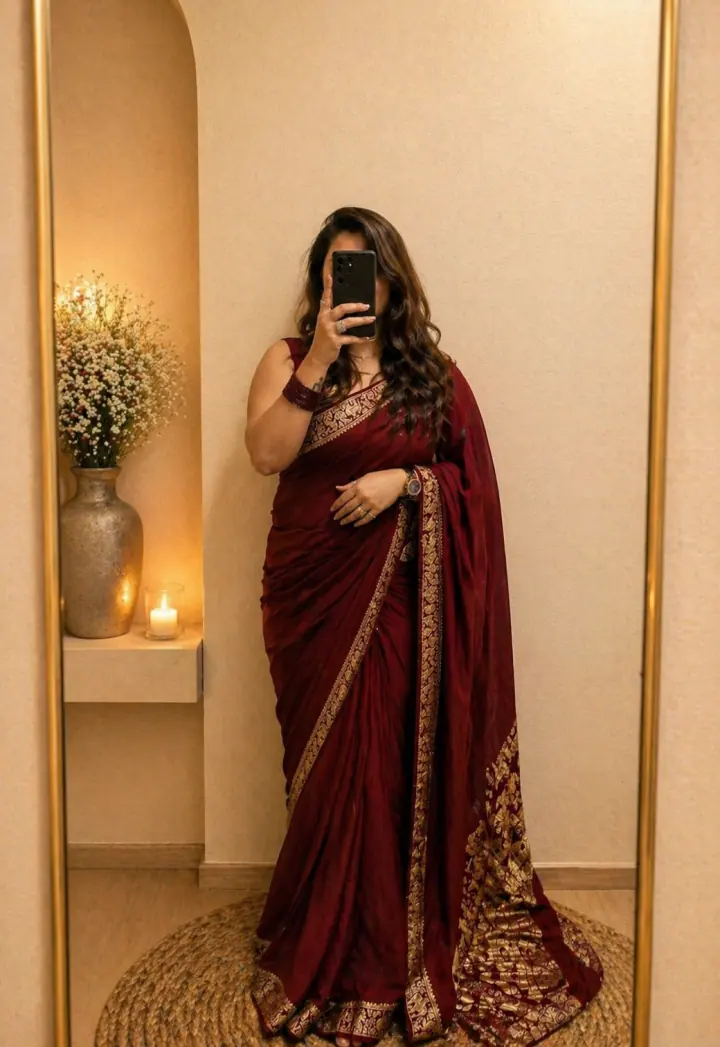
If you're new to buying from India, start with a piece you will wear again and again, such as the pure modal silk saree, or choose something for a special event like the modal silk saree with a Nakshi pallu in maroon. To explore a craft in depth, try Ajrakh sarees. We ship worldwide.